In my experiences as a writer, newspaper reporter, blogger and nursing author, never did I believe there would come a time when I would have to defend telling the truth. "Fake News is Thriving" (Report by Susan Glasser.)
 Susan Glasser report
"Consequently, the media scandal of 2016 isn’t so much about what reporters failed to tell the American public; it’s about what they did report on, and the fact that it didn’t seem to matter," Susan B. Glasser in Brookings report.
"Social media sites should rightfully be doing a lot of soul-searching about their role as the most efficient distribution network for conspiracy theories, hatred, and outright falsehoods ever invented," Glasser. (So true, in fact, it felt like being Isaiah, the voice in the wilderness, trying to push back on the never ending trolls who spread fake news like graffiti all over the Internet- especially on Twitter and Facebook.)
"..entire news ecosystems for partisans existed wholly outside the reach of those who at least aim for truth..." Glasser
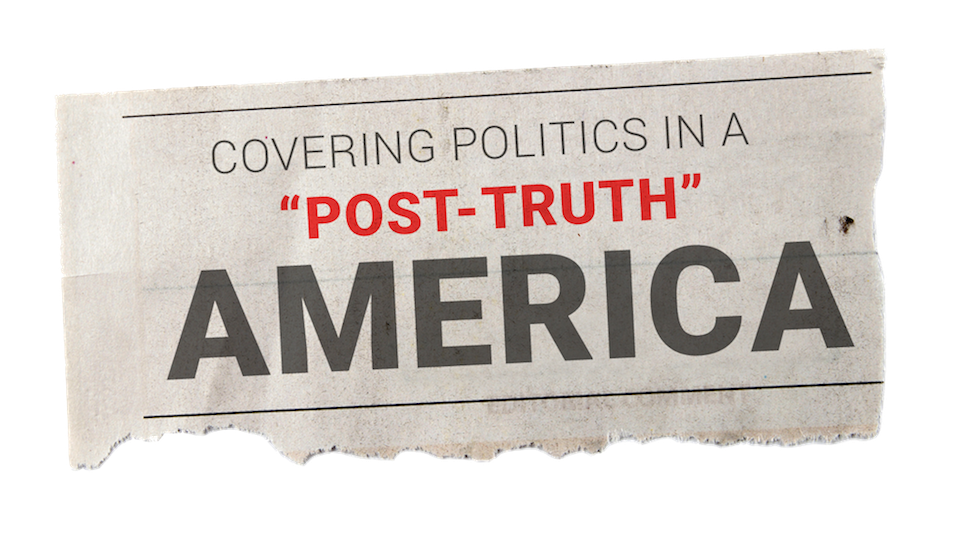
Covering Politics in a Post Truth America- by Susan B. Glasser for the Brookings
Journalism has never been better, thanks to these last few decades of disruption. So why does it seem to matter so little?
Reflections on the media in the age of Trump.
For the last two decades, the rules of political reporting have been blown up. And I’ve cheered at every step along the way. Not for me the mourning over the dismantling of the old order, all those lamentations about the lost golden era of print newspapers thudding on doorsteps and the sage evening news anchors reporting back to the nation on their White House briefings.
Because, let’s face it: too much of Washington journalism in the celebrated good old days was an old boys’ club, and so was politics—they were smug, insular, often narrow-minded, and invariably convinced of their own rightness.
The truth is that coverage of American politics, and the capital that revolves around it, is in many ways much better now than ever before—faster, sharper, and far more sophisticated.
There are great new digital news organizations for politics and policy obsessives, political science wonks, and national security geeks. Today’s beat reporters on Capitol Hill are, as a rule, doing a far better job than I did when I was a rookie there two decades ago, and we get more reporting and insight live from the campaign trail in a day than we used to get in a month, thanks to Google and Facebook, livestreaming and Big Data, and all the rest.
Access to information—by, for, and about the government and those who aspire to run it—is dazzling and on a scale wholly unimaginable when Donald Trump was hawking his Art of the Deal in 1987.
Moreover, we have millions of readers for our work now, not merely a hyper-elite few thousand.
Consequently, the media scandal of 2016 isn’t so much about what reporters failed to tell the American public; it’s about what they did report on, and the fact that it didn’t seem to matter.
But this is 2016, and Trump has just been elected president of the United States after a campaign that tested pretty much all of our assumptions about the power of the press.
Yes, we are now being accused—and accusing ourselves—of exactly the sort of smug, inside-the-Beltway myopia we thought we were getting rid of with the advent of all these new platforms. I’m as angry as everybody else at the catastrophic failure of those fancy election-forecasting models that had us expecting an 85 percent or even a ridiculous 98 percent—thanks Huffington Post!—chance of a Hillary Clinton victory.
All that breathless cable coverage of Trump’s Twitter wars and the live shots of his plane landing on the tarmac didn’t help either. And Facebook and Snapchat and the other social media sites should rightfully be doing a lot of soul-searching about their role as the most efficient distribution network for conspiracy theories, hatred, and outright falsehoods ever invented.
As the editor of Politico throughout this never-to-be-forgotten campaign, I’ve been obsessively looking back over our coverage, too, trying to figure out what we missed along the way to the upset of the century and what we could have done differently.
(An early conclusion: while we were late to understand how angry white voters were, a perhaps even more serious lapse was in failing to recognize how many disaffected Democrats there were who would stay home rather than support their party’s flawed candidate.) But journalistic hand wringing aside, I still think reporting about American politics is better in many respects than it’s ever been.
I have a different and more existential fear today about the future of independent journalism and its role in our democracy. And you should too. Because the media scandal of 2016, isn’t so much about what reporters failed to tell the American public; it’s about what they did report on, and the fact that it didn’t seem to matter.
Stories that would have killed any other politician—truly worrisome revelations about everything from the federal taxes Trump dodged to the charitable donations he lied about, the women he insulted and allegedly assaulted, and the mob ties that have long dogged him—did not stop Trump from thriving in this election year. Even fact-checking perhaps the most untruthful candidate of our lifetime didn’t work; the more news outlets did it, the less the facts resonated. Tellingly, a few days after the election, the Oxford Dictionaries announced that “post-truth” had been chosen as the 2016 word of the year, defining it as a condition “in which objective facts are less influential in shaping public opinion than appeals to emotion and personal belief.”
Meantime, Trump personally blacklisted news organizations like Politico and The Washington Post when they published articles he didn’t like during the campaign, has openly mused about rolling back press freedoms enshrined by the U.S. Supreme Court, and has now named Stephen Bannon, until recently the executive chairman of Breitbart—a right-wing fringe website with a penchant for conspiracy theories and anti-Semitic tropes—to serve as one of his top White House advisers. Needless to say, none of this has any modern precedent. And what makes it unique has nothing to do with the outcome of the election.
This time, the victor was a right-wing demagogue; next time, it may be a left-wing populist who learns the lessons of Trump’s win.
Of course, there’s always been a fair measure of cynicism—and more than a bit of demagoguery—in American politics and among those who cover it, too. But I’ve come to believe that 2016 is not just another skirmish in the eternal politicians versus the press tug of war. Richard Nixon may have had his “enemies list” among the media, but the difference is that today Trump as well as his Democratic adversaries have the same tools to create, produce, distribute, amplify, or distort news as the news industry itself—and are increasingly figuring out how to use them. The bully pulpits, those of the press and the pols, have proliferated, and it’s hard not to feel as though we’re witnessing a sort of revolutionary chaos: the old centers of power have been torn down, but the new ones have neither the authority nor the legitimacy of those they’ve superseded. This is no mere academic argument. The election of 2016 showed us that Americans are increasingly choosing to live in a cloud of like-minded spin, surrounded by the partisan political hackery and fake news that poisons their Facebook feeds. Nature, not to mention Donald Trump, abhors a vacuum.
It’s certainly been fun storming the castle over these last couple decades. But it’s hard not to look at what just happened in this crazy election without worrying: Did we finally just burn it down? And how, anyways, did we get here?
Reporting like it’s 1989
I first came to work in Washington at the back end of the 1980s, during the second-term funk of the Reagan Revolution, as the city obsessed over the Iran-Contra scandal and the rise of rabble-rousing conservatives on Capitol Hill led by a funny-haired guy named Newt Gingrich. Within a few years, Gingrich and Co. would launch an ethics investigation to take out a powerful Speaker of the House, Texan Jim Wright, who left town warning of the new age of “mindless cannibalism” they had unleashed. It was the twilight of the Cold War, even if we didn’t realize it at the time. One November afternoon during my junior year in college I took a nap and when I went downstairs a short while later, I found the security guard in the dorm lobby staring incredulously at a tiny portable TV that had suddenly materialized on his desk. The Berlin Wall had come down while I was sleeping, and it didn’t take an international relations scholar to figure out that pretty much everything, including our politics here at home, was about to change.
To help us understand it all, there were choices, but not that many: three TV networks that mattered, ABC, CBS, and NBC; two papers for serious journalism, The New York Times and The Washington Post; and two giant-circulation weekly news magazines, Time and Newsweek. That, plus whatever was your local daily newspaper, pretty much constituted the news. Whether it was Walter Cronkite or The New York Times, they preached journalistic “objectivity” and spoke with authority when they pronounced on the day’s developments—but not always with the depth and expertise that real competition or deep specialization might have provided. They were great—but they were generalists. And because it was such a small in-crowd, they were readily subject to manipulation; the big media crisis of the Reagan era was all about the ease with which the journalists could be spun or otherwise coopted into the Hollywood-produced story line coming out of Reagan’s media savvy White House, which understood that a good picture was worth more than thousands of words, no matter how hard-hitting.
Eventually, I came to think of the major media outlets of that era as something very similar to the big suburban shopping malls we flocked to in the age of shoulder pads and supply-side economics: We could choose among Kmart and Macy’s and Saks Fifth Avenue as our budgets and tastes allowed, but in the end the media were all essentially department stores, selling us sports and stock tables and foreign news alongside our politics, whether we wanted them or not. It may not have been a monopoly, but it was something pretty close.
Which was why I felt lucky to have landed at a newspaper that was an early harbinger of the media revolution to come. My dad, an early and proud media disruptor himself since the days when he and my mother founded Legal Times, a weekly dedicated to “law and lobbying in the nation’s capital,” had steered me to Roll Call after seeing a story about it buried in the Post’s business section in the spring of 1987. A sort of old-fashioned community bulletin board for Capitol Hill, it had been around for decades but had just been bought for $500,000 by Arthur Levitt, chairman of the American Stock Exchange. Under its new management, Roll Call would now aspire to create real original reporting and scoops for an exclusive audience made up of members of Congress—and the thousands of staffers, lobbyists, political consultants, and activists who served them or sought to influence them. I saw this as an unalloyed good: more tough, independent reporting about an institution that sorely needed it.
This was a pretty radical departure for a quirky tabloid that had been launched by a Hill aide named Sidney Yudain just as the McCarthy era was ending in the 1950s. By the ‘80s, his Roll Call was celebrating a Congress that hardly existed anymore, a hoary institution of eating clubs with silly names, of boarding houses on the Hill where members of both parties holed up without their families while Congress was in session. The paper was perhaps best known for the Hill staffer of the week feature—invariably an attractive young woman—that Sid used to run on page 2 each edition; his most famous model was Elizabeth Ray, who posed vamping on a desk a few years before she admitted to reporters that she couldn’t type, file, or “even answer the phone” though she was a $14,000-a-year secretary to Rep. Wayne Hays. (???)
Jim Glassman, Roll Call’s new editor and publisher, hit on a very different formula for the paper. In this day and age when we celebrate new technology as the source of all media innovation, it seems decidedly retro, but it worked, as both journalism and a business: He hired a staff of aggressive young reporters—I started as an intern in the summer of 1987, then returned full-time after graduating in 1990—and set them loose on the backstage news of Washington. Let Congressional Quarterly send legions of scribes to write down what was said at dull committee hearings, he decreed; Roll Call would skip the boring analyses of policy to cover what really mattered to DC—the process and the people. To make it a must-read, Jim had another rule that made lots of sense: Nothing on our front page should have appeared anywhere else. If it wasn’t exclusive, he didn’t want it. Everybody was already reading The Washington Post; why would they bother with Roll Call, he figured, if it couldn’t deliver stories no one else had?
Soon his reporters were delivering. One of them, Tim Burger, broke the story of the massive overdrafts by free-spending congressmen that would become known as the House Bank scandal, contributing to the exit of dozens of members in the 1992 elections and helping set the stage for the 1994 Gingrich revolution, when Republicans would finally take back control of the House of Representatives for the first time in more than forty years. The ad revenues were flowing too; Jim had found that by making Roll Call a must-read on Capitol Hill and unleashing far more reporting firepower on previously unaccountable dark corners of the Washington power game, he had scores of companies and lobbying groups eager to buy what was now branded “issue advocacy” advertising. Until then, those groups had been paying $50,000 or more for a full-page ad in the Post to reach those whose attention they sought—members of Congress and their staffers—along with hundreds of thousands of readers who were basically irrelevant to them. Roll Call undercut the competition, at first charging as little as a few thousand dollars per page to target, far more efficiently, the audience that the advertisers wanted. Soon, we were coming out twice a week. The scoops—and the ads—kept rolling in.
Within just a few years, Roll Call had been sold to The Economist Group for $10 million. Not long after, when I met Bo Jones, then the publisher of The Washington Post, the first thing he said to me was what a mistake the Post had made by not buying Roll Call itself. The fragmenting of the media had begun.
When news traveled slowly … DC before the web
This was still journalism in the scarcity era, and it affected everything from what stories we wrote to how fast we could produce them. Presidents could launch global thermonuclear war with the Russians in a matter of minutes, but news from the American hinterlands often took weeks to reach their sleepy capital. Even information within that capital was virtually unobtainable without a major investment of time and effort.
Want to know how much a campaign was raising and spending from the new special-interest PACs that had proliferated? Prepare to spend a day holed up at the Federal Election Commission’s headquarters down on E Street, across from the hulking concrete FBI building, and be sure to bring a bunch of quarters for the copy machine. Looking for details about foreign countries lobbying in Washington or big companies paying huge fees? Only by going in person to the Justice Department or the Securities and Exchange Commission could you get it, and too often reporters in that fat, happy, almost-monopoly era, didn’t bother.
When I started reporting in Washington, once or twice a week we would gather around the conference table in Roll Call’s offices near Union Station to sift through a large stack of clips from local newspapers around the country, organized by state and sold to us by a clipping service. Though the stories were sometimes weeks old by the time we were reading them, we’d divvy up the pile to find nuggets that had not yet been reported to the political insiders in Washington: a new development in Connecticut’s heated 5th Congressional District race, a House member under fire out in Oklahoma or Utah. It seems almost inconceivable in the Google-Twitter-always-on media world we live in now, but Congressional Quarterly charged us thousands of dollars a year for this service, and we paid.
Soon enough, CQ wasn’t selling those clips anymore—that line of business having been disrupted not by the internet, which was still in its balky, dial-up, you’ve-got-AOL-mail stage, but by the fax machine. The Hotline was a faxed newsletter that came out late morning every day, a compilation of headlines and news nuggets from around the country. We were addicted to it. I remember the feeling of anticipation as its pages spilled off the machine and curled up on the floor while we pestered Jane, our copy editor, to make copies for each of us.
Social media sites should rightfully be doing a lot of soul-searching about their role as the most efficient distribution network for conspiracy theories, hatred, and outright falsehoods ever invented.
(IMO- it's quite the opposite. Those demonic social media trolls will never stop until people like me join with others to learn how to push back...!!!)
The same proliferation of news—and noise—was happening all over town. While we were busy reporting previously ignored stories the big guys didn’t know or care about, the upstarts at cable news were filling not just one carefully edited nightly newscast but 24 hours a day with reports—and, increasingly, shouty partisan talk shows—about goings on in the capital. We all watched those too. Access to information has always been Washington’s currency; speed up the news cycle, and we had no choice but to race ahead right along with it.
In 1998, I started work at The Washington Post as the investigative editor on the national desk. Little more than a week after my arrival, on January 17, 1998, at 9:32 on a Saturday night, Matt Drudge’s website first leaked word of the blockbuster scandal that was about to engulf President Clinton and Monica Lewinsky. I had expected to edit stories about Clinton’s aggressive fundraising in the White House, not his dalliance with a former intern. But now it seemed that independent prosecutor Ken Starr’s unprecedented probe could even force the president to quit, and I remember well the day we all stood riveted in front of the TVs in the Post’s famous fifth-floor newsroom to watch Clinton’s less-than-convincing denials of “sexual relations with that woman.” Over the weeks that followed, the internet drove a Washington news story as it never had before: The Drudge Report had proved beyond a doubt that the old gatekeepers of journalism would no longer serve as the final word when it came to what the world should know.
But some things didn’t change as fast as all that.
At the Post, I soon learned, internet access was still handed out as a privilege to individual editors on a need-to-have-it basis.
Everyone else was expected to go to the paper’s in-house library, where researchers would search the internet and various databases on our behalf and one could request paper files of moldering clips to inspect while pounding out a story on deadline. Needless to say, the wheels ground slowly. I may have been the assignment editor overseeing coverage of the spiraling investigation of the president of the United States, but it was only with much lobbying and obscure bureaucratic machinations that I arranged for a clunky dial-up external modem to land on my desk weeks into the scandal.
By the time the story culminated in a presidential confession and an unprecedented Senate impeachment trial and acquittal, the internet would no longer be considered a perk but a necessity for our news-gathering. My soon-to-be husband, White House reporter Peter Baker, would file the paper’s first web-specific dispatches from the congressional impeachment debates. And when the slow machinery of government responded to the new, faster era by releasing its legal filings and document dumps electronically (then as now these would invariably occur late on Friday afternoons, preferably before a holiday weekend), we in turn responded by making them available online for all the world to see. In the end, the Lewinsky affair gave us more than the icky Starr report, with its talk of Lewinsky’s blue dress and thong underwear and the inappropriate use of cigars in the Oval Office.
Washington scandals would remain a constant in the coming decades, but how we covered them would be different.
Still, it remained a print world in ways that are hard even to imagine now.
The old presses shook the Post building starting around 10 p.m. each night just as they had for decades, and sometimes, if the news was big, as it often was during the 13 long months of the Lewinsky scandal, there would be a line of people waiting in front when the first edition came out around midnight. The nightly 6 p.m. front-page meetings in the old conference room with the framed “Nixon Resigns” headline staring down at us were taken very seriously, and the feverish lobbying for a spot on that page was an indication of how much we were all convinced it mattered. Although we had a website by then and published our articles on it each night, the national editors of the Post still trusted the more ancient methods of finding out what the competition was up to: at 9 p.m., the news aide in the New York bureau would be patched through on speakerphone as she held up her receiver to the radio, so that we could hear the announcer on the New York Times-owned WQXR radio station reading out the early headlines from the next day’s Times. When the Starr report finally came out in September of 1998, we printed the entire thing—all 41,000 words—as a special section in the next day’s newspaper, and the only debate I recall was not whether we should make such a sacrifice of trees when the whole thing was available online but whether and if to edit out any of the more overtly R-rated parts of the report on the president and his twenty-something girlfriend’s White House antics.
At the end of the impeachment scandal, as Vice President Al Gore was busy blowing his lead over Texas Governor George W. Bush in the 2000 presidential race and an unknown former KGB agent named Vladimir Putin was rising from obscurity to emerge as Boris Yeltsin’s handpicked successor as president of Russia, Peter and I decided to move to Moscow as foreign correspondents for the Post. Before we headed out, we went up to the ninth floor of the boxy old Post building on 15th Street in downtown Washington to say goodbye to owner Don Graham. As the conversation ended, we asked Don how the paper was doing. At this point, the Post still claimed the highest “penetration” rate of any big paper in the country among readers in its metropolitan area and had spent the boom decade of the 1990s investing $230 million in its physical printing presses while adding dozens of reporters to its newsroom, the vast majority devoted to local coverage of the fast-growing D.C. suburbs.
We’ll be fine, Don told us, as long as the classified ads don’t go away.
Four years later, when we returned from Moscow and the wars in Afghanistan and Iraq, the classifieds were essentially gone. Soon to be followed by those pages and pages of Macy’s ads and supermarket coupons. But hundreds of reporters and editors were still showing up at the giant newsroom each day to produce a print newspaper, while the website that would be its future—or its demise—was still largely an afterthought run by a team both legally and physically separated from the newsroom, across the Potomac River in a soulless office tower in Arlington, Virginia.
Disrupting the disruptors
It’s hard even to conjure that media moment now. I am writing this in the immediate, shocking aftermath of a 2016 presidential election in which the Pew Research Center found that a higher percentage of Americans got their information about the campaign from late-night TV comedy shows than from a national newspaper.
Don Graham sold the Post three years ago and though its online audience has been skyrocketing with new investments from Amazon.com founder Jeff Bezos, it will never be what it was in the ‘80s. That same Pew survey reported that a mere 2 percent of Americans today turned to such newspapers as the “most helpful” guides to the presidential campaign.
In fact, the pace of change has speeded up so much that the Washington disruptors are themselves now getting disrupted.
Take Roll Call, whose trajectory since I worked there reveals much about the ups and downs of Washington journalism.
At first, it grew fast, expanding to four days a week after I left, and eventually, in 2009, paying the almost unthinkable sum of $100 million to gobble up the entire Congressional Quarterly empire it had started out dismissively competing with. It seemed to work brilliantly as a business too: The “issue advocacy” market Roll Call did so much to create is now estimated to be worth some hundreds of millions of dollars a year, along with the equally robust trade in insider subscription news and information services to navigate what’s really going on in official Washington, which is why Bloomberg dropped a reported astonishing $1 billion—in cash—in 2011 to buy BNA, a Washington-based company of specialized policy newsletters on everything from agriculture to taxes.
But Roll Call’s own share of that booming market has dropped precipitously. First came The Hill, a new competitor that launched in 1994 and has recently positioned itself as a sort of down-market, high-traffic internet tabloid for Washington. Then came Politico, founded by two former Post colleagues of mine and owner Robert Allbritton in late 2006.
Politico aimed to own and shape the Washington conversation—and to compete at both ends of the Washington journalism food chain. It took on the Post at a time when the big daily newspaper just couldn’t wrap itself around the newly competitive reality of the digital era, and also smacked down niche players like Roll Call, which had been the first to get how much faster the Washington news cycle could be but struggled to catch up to the even faster new rhythms of the web and was in any case more worried about preserving the hard-won print ad dollars it had stolen from the Post than going really digital when it could have and should have.
Politico came in vowing to “win the morning,” which, back in 2007, turned out to be a genuine competitive advantage in the still-sluggish, roll-in-at-10-take-a-long-lunch world of Washington journalism. With its get-it-up-now, web-first mentality and the round-the-clock updates that it featured on blogs like Ben Smith’s eponymous news feed, Politico was cutting edge at a moment when Facebook was still a hangout for college students and not their moms, Twitter was some trendy new West Coast thing, and BlackBerries were ubiquitous in the corridors of government.
Washington, a city where information has always been power, loved it. During and after the 2008 election, Barack Obama and his aides would bemoan the Politico-ization of Washington, while avidly reading every word of it. In 2013, Mark Leibovich wrote a bestselling book called This Townabout the party-hopping, lobbyist-enabling nexus between Washington journalists and the political world they cover. A key character was Politico’s Mike Allen, whose morning email newsletter “Playbook” had become a Washington ritual, offering all the news and tidbits a power player might want to read before breakfast—and Politico’s most successful ad franchise to boot. In many ways, even that world of just a few years ago now seems quaint: the notion that anyone could be a single, once-a-day town crier in This Town (or any other) has been utterly exploded by the move to Twitter, Facebook, and all the rest. We are living, as Mark put it to me recently, “in a 24-hour scrolling version of what ‘Playbook’ was.”
These days, Politico has a newsroom of 200-odd journalists, a glossy award-winning magazine, dozens of daily email newsletters, and 16 subscription policy verticals. It’s a major player in coverage not only of Capitol Hill but many other key parts of the capital, and some months during this election year we had well over 30 million unique visitors to our website, a far cry from the controlled congressional circulation of 35,000 that I remember Roll Call touting in our long-ago sales materials.
Politics was never more choose-your-own-adventure than in 2016, when entire news ecosystems for partisans existed wholly outside the reach of those who at least aim for truth
Through all these shakeups, I remained a big optimist about the disruption, believing that so many of the changes were for the good when it came to how we cover Washington. The general-interest mission of places like The Washington Post in its heyday had meant that the paper played a crucial role as a public commons and community gathering place—Don Graham loved the idea that there was something that bound together the bus driver in Prince George’s County, Maryland, with the patrician senator on Capitol Hill, and the brigadier general in the Pentagon, and so did I. But that very well-intentioned notion also translated into a journalism that was often broad without being sufficiently deep. We told amazing stories and went to the dark corners of the globe but we also took our audience for granted, and tended to act like monopolists everywhere, not infrequently mistaking entitlement for excellence.
In recent years, it seemed to me, we were moving beyond those constraints, blessed by the forces of technological innovation with great new tools for covering and presenting the news—and an incredible ability to get the word out about our stories more quickly, cheaply, and efficiently than ever before. Most importantly, the constant new competition was serving to make our actual journalism better and better, and wasn’t that the point? I was sure that the story of the last few decades wasn’t really just about shiny new platforms and ever speedier news cycles, but about information and the value it could and should have for those who need to know what is really going on in Washington.
It’s true that there were other, more worrisome developments alongside this democratization of information and the means to report on it. While I was celebrating the new digital journalism, others worried, correctly, about the accompanying rise of a new world of partisan spin, hype, and punditry, not to mention the death of the business models that supported all that investigative journalism. And yet I remained convinced that reporting would hold its value, especially as our other advantages—like access to information and the expensive means to distribute it—dwindled. It was all well and good to root for your political team, but when it mattered to your business (or the country, for that matter), I reasoned, you wouldn’t want cheerleading but real reporting about real facts. Besides, the new tools might be coming at us with dizzying speed—remember when that radical new video app Meerkat was going to change absolutely everything about how we cover elections?—but we would still need reporters to find a way inside Washington’s closed doors and back rooms, to figure out what was happening when the cameras weren’t rolling. And if the world was suffering from information overload—well, so much the better for us editors; we would be all the more needed to figure out what to listen to amid the noise.
As the 2016 election cycle started, I gave a speech to a journalism conference that was all about the glass being half full. “Forget the chestbeaters and the look-at-what’s-losters,” I said.
This is going to be a golden age for anyone who cares about journalism and access to new ideas and information. In a time of transformation, there are losers to be sure but winners too—why not aim to be on the side of what’s being created, not what’s being destroyed? Think about how to preserve the best of what we’ve inherited, along with the new ideas that will come from having dazzling new tools and capabilities we couldn’t have dreamed of just a few short news cycles ago.
I still think that.
But it’s hard not to have experienced The Trump Show (IMO- the Trumpzi cult movement) and all that’s gone along with it without having some major new qualms.
Transparency—without accountability
At a few minutes after 4 p.m. on Friday, October 7, I was sitting in a conference room with Politico’s top editors, deciding what stories to feature on our homepage when Blake Hounshell, our website’s editorial director, looked up from his laptop and gasped.
Soon, we all heard why as Blake hit the play button on a video just posted on The Washington Post’s website. There was Donald Trump’s voice, snide and belittling, bragging off-camera to an Access Hollywood reporter of his sexually aggressive behavior toward women in words so crude they’d never appeared before in any major news outlet.
It was clear to all of us in an instant that this was a game-changer, an accountability moment in a campaign sorely lacking them, and we editors were sure—as sure as we were about anything in politics—that Donald Trump would now face a reckoning for his misogynistic attitudes and questionable behavior toward women.
Clearly that reckoning never came. And in retrospect, perhaps we could have anticipated that it might not. Even as we sat gasping at the Access Hollywoodvideo, I thought back to that day so long ago in the Post newsroom, when we journalists were convinced the revelation of the Starr investigation into Bill Clinton’s womanizing—and the lies he told to avoid responsibility for it—could spell the end of Clinton’s presidency. Within days, Trump was thinking of that moment too, and in the effort to deflect attention from his scandalous behavior toward women, he sought to resurrect Bill Clinton’s old misdeeds, parading several of the women from Clinton’s 1998 scandals before the cameras at his second presidential debate with Clinton’s wife. Trump turned out to be more correct than we editors were: the more relevant point of the Access Hollywood tape was not about the censure Trump would now face but the political reality that he, like Bill Clinton, could survive this—or perhaps any scandal. Yes, we were wrong about the Access Hollywood tape, and so much else.
Fake news is thriving
In the final three months of the presidential campaign, the 20 top-performing fake election news stories generated more engagement on Facebook than the top stories from major news outlets such as The New York Times.
Of course, that’s not how it seemed at the time.
It’s hard to remember now, amid all the anguished self-examination after the shocking outcome of the election, but it was at least occasionally a great moment for journalism. If ever there were a campaign that called for aggressive reporting, this one did, and it produced terrific examples of investigative, public service-minded journalism at its best. In a way, it was even liberating to have a candidate so disdainful of the old rules as Donald Trump.
With some of us banned for months from his rallies, even as they were more extensively recorded by more participants than perhaps any political events in the history of the world (thanks, iPhone), we journalists were still able to cover the public theater of politics while spending more of our time, resources, and mental energy on really original reporting, on digging up stories you couldn’t read anywhere else. Between Trump’s long and checkered business past, his habit of serial lying, his voluminous and contradictory tweets, and his revision of even his own biography, there was lots to work with. No one can say that Trump was elected without the press telling us all about his checkered past. Or about Hillary Clinton’s for that matter; her potential conflicts of interest at the Clinton Foundation, six-figure Wall Street speeches, and a secret email server were, in my view, rightfully scrutinized by the media. It’s just the kind of stuff we got into journalism to do.
And yet …
We’ve achieved a lot more transparency in today’s Washington—without the accountability that was supposed to come with it.
While it’s true that fears about the fragmentation of the media, the destruction of our public commons, the commodification of the news, and the death of objective reporting have been around as long as I’ve been in Washington, politics was NEVER more choose-your-own-adventure than in 2016, when entire news ecosystems for partisans existed wholly outside the reach of those who at least aim for truth. Pew found that nearly 50 percent of self-described conservatives now rely on a single news source, Fox, for political information they trust. As President Obama has famously observed, “If I watched Fox News, I wouldn’t vote for me either.” As for the liberals, they trust only that they should never watch Fox, and have MSNBC and Media Matters and the remnants of the big boys to confirm their biases. And then there are the conspiracy-peddling Breitbarts and the overtly fake-news outlets of this overwhelming new world; untethered from even the pretense of fact-based reporting, their version of the campaign got more traffic on Facebook in the race’s final weeks than all the traditional news outlets combined.
When we assigned a team of reporters at Politico during the primary season to listen to every single word of Trump’s speeches, we found that he offered a lie, half-truth, or outright exaggeration approximately once every five minutes—for an entire week. And it didn’t hinder him in the least from winning the Republican presidential nomination. Not only that, when we repeated the exercise this fall, in the midst of the general election campaign, Trump had progressed to fibs of various magnitudes just about once every three minutes! So much for truth: By the time Trump in September issued his half-hearted disavowal of the Obama “birther” whopper he had done so much to create and perpetuate, one national survey found that only 1 in 4 Republicans was sure that Obama was born in the U.S., and various polls found that somewhere between a quarter and a half of Republicans believed he’s Muslim. So not only did Trump think he was entitled to his own facts, so did his supporters. It didn’t stop them at all from voting for him.
At least in part, it’s not just because they disagree with the facts as reporters have presented them but because there’s so damn many reporters, and from such a wide array of outlets, that it’s often impossible to evaluate their standards and practices, biases and preconceptions. Even we journalists are increasingly overwhelmed. Can we pluck anything out of the stream for longer than a brief moment? Can our readers?
As this wild presidential campaign progressed, that became my ever-more nagging worry and then our collective nightmare—the fear, clearly realized, that all the flood of news and information we’ve celebrated might somehow be drowning us. So much terrific reporting and writing and digging over the years and … Trump? What happened to consequences? Reporting that matters?
Sunlight, they used to tell us, was the best disinfectant for what ails our politics.
But 2016 suggests a different outcome: We’ve achieved a lot more transparency in today’s Washington—without the accountability that was supposed to come with it.
And that for my money is by far the most dispiriting thing about this campaign season: not the mind-numbing endless chatter or the embarrassing bottom-feeding coverage or even the stone-throwing barbarians lying in wait to attack any who dare to enter Twitter or Facebook.
So what’s an editor with a no longer always half-full glass to do?
Four days after the election, I moved to Jerusalem to become a foreign correspondent again for a few years. To a troubled part of the world where the stones thrown are real and not metaphorical. Where an entire region is in the midst of a grand and violent reckoning with the fallout of a failed political order. And where, not coincidentally, the results of the election this year in the world’s remaining superpower will matter almost as much as they will back in Washington.
Facts may be dead, but here’s one I’ll take with me, and it’s a truth as rock-solid as those Facebook feeds are not: elections, in America or elsewhere, still have consequences.
Susan B. Glasser served as editor of Politico throughout the 2016, campaign. The founding editor of Politico Magazine, she has also been editor-in-chief of Foreign Policy magazine; a foreign correspondent, editor, and political reporter for The Washington Post; and co-chief of the Post’s Moscow Bureau with her husband, Peter Baker. Their book, Kremlin Rising: Vladimir Putin’s Russia and the End of Revolution, was published in 2005. Prior to the Post, Glasser worked for eight years at Roll Call, where she rose from an intern to become the paper’s top editor.
Labels: Facebook, fake news, Susan Glasser, twitter




 As far as oil prices, U.S. oil companies are simply taking advantage of high global crude prices by holding back on refining the huge supply of oil they already have stored.