Maine Writer

Its about people and issues I care about.

My Photo
Name:
Location: Topsham, MAINE, United States

My blogs are dedicated to the issues I care about. Thank you to all who take the time to read something I've written.

Thursday, April 19, 2018

John Bolton is not suited for National Security ~ he is a clear and present danger

An echo opinion from The Daily Iowan 

John Bolton a disaster for diplomacy, level-headedness

John Robert Bolton 

John Bolton has a history of lying, shady dealings, and bullying.

By Jacob Prall

jacob-prall@uiowa.edu

John Bolton is a hawk. Pure and simple, the man is a lover of all things that go boom. He talks about war, he dreams about war —it seems he may need war to survive. Bolton's name is on everyone’s lips in D.C., because his ascension to national security adviser has the rest of the world on edge. 

Bolton still supports the Iraq War, wants to start a war with nuclear-power North Korea, and is desperate for a conflict in Iran. He is a danger to the world and to American interests everywhere.

Some in the media label Bolton a “neocon” or a “paleocon,” but these aren’t accurate. Paleoconservatism evolved from antiwar conservatism in the 1930s. Antiwar? Doesn’t sound like Bolton. Neocons, on the other hand, trace their lineage back to the anti-communist liberals of the 1970s who moved further right as the Democratic Party moved left. They believe in unilateral U.S. action and also believe U.S. power should be used to spread American ideals. That still isn’t Bolton; he’s a pure hawk. The hawks, like the neocons, embrace aggressiveness and despise nation-building, but they drink the “America First” Kool-Aid and don’t mind intervening anywhere and everywhere. Hawks led us into Iraq War, squandering hundreds of billions of dollars, costing millions of lives, and leading to the rise of ISIS. With a track record like that, you’d think hawks would go extinct. And they were — until Trump, of course.

Bolton was rejected as U.N. ambassador by Republicans and Democrats in 2005. Understandably — Bolton once claimed, “There is no United Nations,” and he openly deplores diplomacy. The pivotal moment came when Carl W. Ford Jr., former assistant secretary of state for intelligence and research, testified that Bolton was a “kiss-up, kick-down sort of guy,” a “serial abuser” of subordinates who attacked anyone trying to contradict him. He has manipulated intelligence to serve his agenda leading up to the Iraq War. His history of misleading the public makes him a natural choice for the Trump administration.

In recent years, Bolton spent his time ranting on cable news and hiring topical bad guys Cambridge Analytica to develop psychological profiles of voters for his SuperPAC. From August 2014 to August 2016, Bolton’s SuperPAC spent $1.2 million on “survey research” from the firm, whose methods include unscrupulous data mining of Facebook user profiles. It isn’t too surprising, as Bolton, Cambridge Analytica, and Trump are all paid off by the ultra-right, billionaire Mercer family.

What will come from Bolton as national security adviser? The most likely, and perhaps most devastating action could be the withdrawal from the Iran nuclear deal, something he and Trump both vehemently oppose. Iran is complying with the invasive and intensive requirements of the accord. If the deal is scrapped, it will move without restriction to enrich uranium and build nuclear weapons. The extremist element in Iran’s government, the Islamic Revolutionary Guards, will declare the West untrustworthy and undermine the moderate parties in Iran.

Perhaps worst of all, the move will sabotage any negotiations with North Korea by exposing U.S. nuclear-weapon diplomacy as easily dismissable and unstable. If we don’t play by the rules with Iran, why would we with North Korea? And of course, we will be isolated diplomatically — the Iran nuclear deal is supported by every major power.

Bolton is a shady character who loves to bully, is enamored with the idea of blood and destruction, and who has a penchant for lying and isolating America from its allies. What could possibly go wrong?

MaineWriter ~ In other words, John Bolton is not qualified to lead America's National Security.

Labels: , , , , ,

Wednesday, January 11, 2017

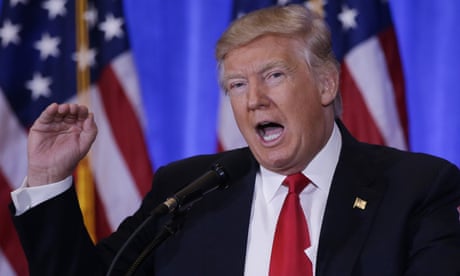
Russia Are You Listening? #DJT

"Donald Trump is full of many things, but his energy levels are neither relevant nor particularly reassuring at this point."- Richard Wolffe in "The Guardian"

Obviously, Donald Trump is at war with America's intelligence community. Moreover, FBI Director James Comey is hopefully second guessing his actions to investigate the "Where is Waldo?" bogus search for Secretary Clinton's "dragons on windmills" emails, as in Don Quixote, because now he's in the company of intelligence officials who are denigrated by Donald Trump, just because they're doing their jobs.  Frankly, in my opinion. all Americans are suspicious of Donald Trump's best friend complex with Vladimir Putin. We trust our US intelligence agencies to provide the best information possible about our international clandestine operations. We believe the Federal Bureau of Investigaton (FBI), the Central Intelligence Agency (CIA) and the National Security Administration (NSA) because the three, acting together, must be trusted. On the other hand, we don't trust Donald Trump and his unhinged inability to provide political leadership.
Nevertheless, it doesn't take a clandestine operative to figure out how Donald Trump invited Russia to hack the American election.

Donald Trump said, "Russia are you listening?". Of course, they were listening and in so doing, Putin responded.

At a news conference, the first since July 27th, Donald Trump proved how unhinged he really is. 

Trump's trainwreck press conference ushers in a clueless presidency- by Richard Wolffe in "The Guardian"


Richard Wolffe

Donald Trump isn't what he seems. The supposed master of media manipulation stumbled so often at his first press conference, it is hard to recall why anyone thought the TV star was good at this stuff in the first place.
Donald Trump "Achtung" at his combative "presser"- obviously Russia was listening to Donald Trump they apparently covertly hacked his 2013, Moscow visit.
Donald Trump lashes out at media and intelligence agencies over Russia claims

If the potentially explosive story embroiling him weren’t so salacious, you might say this is a case of the emperor’s new clothes. Instead, it’s safe to say the Trump presidency is already in shambles. And it has yet to reach its official start.

For a showman who promised to restore the Reagan era – and even ripped off Reagan’s slogan – this is just one of the most surprising revelations of the past few days.

Reagan and his advisers knew how to project a sunny image that kept the presidency separate from whatever the pesky media wanted to focus on, such as high unemployment or secret gun-running to enemy states.

Judging from Wednesday’s train wreck press conference – the first since July – Trump and his handlers have no self-discipline and no strategy to deal with the (serious IMO) Russian crisis that has been simmering for the best part of the past year.

They also have no sense of irony or, apparently, reality. The press conference opened with Sean Spicer, the incoming press secretary, condemning the media coverage of Trump’s compromised relationship with Russia as “frankly outrageous and highly irresponsible”.

It seems churlish to have to recall this tweet from Trump in the closing phase of the recent election: “Did Crooked Hillary help disgusting (check out sex tape and past) Alicia M become a US citizen so she could use her in the debate?”

This kind of thing makes it hard for the new White House to pass the laugh test, never mind the smell test. It’s heartwarming to know that the president-elect is so concerned about how fake news can destroy real people. If only he had the self-awareness and self-discipline to live by his own words.

In any crisis you generally try to deflect attention from your own misconduct. Instead, Team Trump seems happy to shine a bright light on its own monumental mistakes.

That included the wonderful personal testimony from the incoming vice-president, Mike Pence, who introduced his boss by assuring us that he was full of what he called “energy”. Perhaps Pence has been spending too much time with someone who liked to criticize his primary opponents for having low energy.

Donald Trump is full of many things, but his energy levels are neither relevant nor particularly reassuring at this point.


Besides, if you need your vice-president to attest to your character, you’re such damaged goods that your executive position is already in jeopardy.

Pence’s introduction recalled Al Gore’s sad pep rally on the south lawn of the White House defending Bill Clinton as “one of our greatest presidents” in the late desperate stages of the Monica Lewinsky scandal.

In many ways, Trump has snowballed all the Clinton scandals into one shock-and-awe transition. He has somehow combined all the anti-Clinton accusations of foreign influence and financial irregularity in the 1996 re-election, with the dubious personal morality of the Lewinsky affair and the never-ending tendency towards cronyism. Only it took the Clintons decades to accrue these kinds of entanglements.

We could compare the relative importance of being Putin’s poodle versus sex with an intern, but what’s the point? After all, Trump can make the case better than any of us.

Without any sense of shame or patriotism, the president-elect celebrated the Russian hacking of the DNC and all those leaked emails. He even bragged about his closeness to the Russian president before claiming – somehow – that Hillary Clinton was the real poodle.

If this is Trump’s playbook for crisis management, his political opponents should sit back and enjoy the show.

“If Putin likes Donald Trump, guess what folks, that is called an asset, not a liability,” Trump said. “Do you honestly believe that Hillary would be tougher on Putin than me? Give me a break.”
(This statement is the biggest crock of *youknowwhat because Russian Vladimir Putin is a serial assassin; so, if Donald Trump considers knowing him to be an asset, then it's no wonder he's gone bankrupt 6 times.)

Yes, Mr President-elect. The intelligence reports are indeed calling you an asset in the context of Russia. You may keep using that word but, as in the Princess Bride, I do not think it means what you think it means.

Trump will never learn from his mistakes. Suspecting the recent Russia revelations are the work of the intelligence agencies, Trump continues to wage war on his own spies. Unbelievably, Trump could offer no proof of such a betrayal but continued to trash the CIA in public all the same.

This kind of struggle does not end well for sitting presidents, as Richard Nixon discovered. Bob Woodward and Carl Bernstein’s biggest source, known as Deep Throat, was in fact the deputy director of the FBI.

Although, one might think that the main purpose of Trump’s press conference was to squash the Russia dossier news, oh, no, that was just the first few minutes of the affair.

After a rambling introduction about car makers, veterans affairs and his inaugural celebrations, Trump finally arrived at his desired topic of the day: the non-resolution of the conflicts of interest that will embroil his presidency from now until he leaves the Oval Office.

A table stacked with yellow envelopes was supposed to represent all the documents Trump signed to disentangle his business affairs from his presidency, by passing management control of the Trump Organization to his sons.

Rather like a suitcase supposedly full of cash, it was hard to tell if any of the documents were real without, you know, releasing them to the press like his tax returns. Instead, we were forced to listen to his personal attorney assuring us there was a wall being built between the presidency and the Trump(zi) Organization.

That wall is about as solid as Trump’s other proposed wall on the southern border, given that there is no divestment. Why not? As the Trump attorney explained, a fire sale of Trump assets would be unfair to the president-elect and it was impossible to find an independent trustee competent enough to do so anyway.

Oh yes, and such a divestment would involve a lot of third-party debt, despite Trump’s claims that he has no debt.

The more details that emerge from Team Trump, the worse Trump looks. Of course the Russian dossier couldn’t be true, said the president-elect: “I’m also very much a germophobe, by the way.”

If this is Trump’s playbook for crisis management, his political opponents should sit back and enjoy the show. Like a dog that returns to his vomit, this president-elect just can’t help himself. 

Let the (dangerous!) follies begin.

(Maine Writer op: Of course, Russia is listening to Donald Trump, because they obviously hacked his visit to Moscow and, therefore, he's now officially coopted. Mayday!)

Labels: , , , , , , ,

Sunday, January 08, 2017

Alec Baldwin is a talented "Ronald Reagan"

I hereby award Alec Baldwin with a personal Emmy Award!  

He's as good an actor as Ronald Reagan was; and an even better Presidential reenactor.

Baldwin's acting talents are more impressive than ever, especially since he has taken on portrayals of Donald Trump.  

Although Mr. Baldwin has portrayed many characters in his brilliant acting career, his synical Trump parody may be among the most memorable.
Talented actor Alec Baldwin has made "Trump-orange"the new political fashion
Thank you Alec Baldwin! Some in social media are calling on "Baldwin for President". Surely, his ability to build confidence in his intellect and his political intuitiveness make him at least as qualified a presidential candidate as actor-politician, Ronald Reagan.

Reported in "Entertainment" by NICK ROMANO@NICKAROMANO: 
It’s Alec Baldwin vs. Donald Trump round…well, we’ve lost count.  Baldwin, who’s been parodying Trump on Saturday Night Live (SNL), trolled the President-elect by sporting one of his red “Make America Great Again” hats with the slogan written in Russian. While there was no caption, the image is likely a reference to Trump’s controversial relationship with Russian President Vladimir Putin.

Trump continuously praised Putin both during and after his presidential campaign. Even as U.S. intelligence agencies determined Putin personally “ordered an influence campaign in 2016 aimed at the U.S. presidential election” with a “clear preference for President-elect Trump,” according to The New York Times, Trump expressed his doubt over the information through a series of tweets. (MaineWriter: It's irresponsible for Donald Trump to denegrate US intelligence!)


Donald Trump was totally  inappropriate when, after he was finally briefed on the Russsian situation (this week), after which he tweeted, “Gross negligence by the Democratic National Committee allowed hacking to take place.The Republican National Committee had strong defense!”  (Listen up Donald Trump- your hypocrisy is showing!  The issue is this- it's about the Russian attack on the US!  Your election is not credible. Russia if you're listening!)


“Intelligence stated very strongly there was absolutely no evidence that hacking affected the election results,” he continued. “Voting machines not touched!” (HELLO? Donald Trump- just so you know, the popular vote elected Hillary Clinton by 2.8 + million votes!  In arithematic language, that means you lost the election. It was the Electoral College that elected you in spite of the electorals' responsibility to vote for the qualified Hillary Clinton.)

However, it should be noted the controversy over the hacking wasn’t over voting machines, but rather spreading fake news and defamatory information about one candidate and not the other.

Delusional Trump said in a Tweet- "Having a good relationship with Russia is a good thing, not a bad thing. Only ‘stupid’ people, or fools, would think that it is bad!,” Trump wrote. “We…..have enough problems around the world without yet another one. When I am President, Russia will respect us far more than they do now and….both countries will, perhaps, work together to solve some of the many great and pressing problems and issues of the WORLD!”


Unbelievably, Donald Trump has no conscience. He doesn't understand that the Russian election hacking was about the credibility  of our American intelligence services, the Central Inelligence Agency (CIA, the Federal Bureau of Investigation (FBI) and the National Security Administration (NSA). Donald Trump criticized these agencies. In fact, Donald Trump is unqualified to lead and especially inept when he criticizes our American intelligence organizations.

Thank you Alec Baldwin for showing Americans the "real Donald Trump". Your entertainment talents have made the color "Trump orange" the new fashion rage! Emmy, Emmy!

Perhaps Alec Baldwin will be our next Democratic presidential leader!  He's certainly more of a talented actor than President Ronald Reagan every hoped to be. 


Labels: , , , ,

Monday, January 20, 2014

National Security and American Security

This blog includes a fascinating true spy story by David Wise, published in "The Smithsonian" and reprinted in "The Week". It's a case study on what Americans don't know and, leaping forward, why we need the NSA.

One thing I know about National Security is that I don't know a lot. Nevertheless, I know Americans became lulled into a sense of invulnerability when terrorists attacked New York City and Washington DC on September 11, 2001. In retrospect, the clues were there, but Americans didn't have the capacity to react.

Although the National Security Agency (NSA) is unfortunately a focus of public disdain, Americans must consider an alternative. To let our national security lapse will put all Americans at risk for unknown dangers exceeding the collateral impact of invasion of our privacies.  In fact, our credit cards and online purchasing vendors have copious information about who we are, our demographics, income, socio-economic status and purchasing power. Americans need a National Security Agency to oversee devious agents who are intent on doing our nation irrevocable harm.  

There's overwhelming evidence in American history about times when our nation didn't have reliable covert information. It baffles me to realize the short length of our historical memory.

An excellent article by David Wolfe in The Smithsonian (October 2013) and in the January 17, 2014 "The Week", describe a time in our recent past when the Federal Bureau of Investigation (FBI) spent decades searching its ranks for a Russian KGB agent. 

"The Inside Man" is a true spy story and a lesson in how the world continues to be a very dangerous place where people of unknown motivation are intent on creating chaos.

A tip provided by a double-agent for the KGB set off one of the most self-destructive mole hunts in FBI history

One spring night in 1962 a short, stocky Russian walked into the FBI office in Midtown Manhattan and offered his services as a spy for the United States. Aleksei Kulak, then 39, was working undercover as a science official at the United Nations. He said he was unhappy with his progress at his true employer, the KGB.


Kulak was taking a huge risk simply by entering the FBI office. The building was on East 69th Street at the corner of Third Avenue—just three blocks from the Soviet U.N. mission on Park Avenue at 68th Street, which provided cover for dozens of KGB agents. “Aren’t you worried they may be watching the FBI building?” an FBI agent asked.

“No,” Kulak replied. “All of our people are out covering a meeting with your guy, Dick.”

Your guy, Dick.


The Russian was clearly saying that the KGB had a mole inside the FBI. With those three words, he set off an earthquake inside the bureau that reverberated for decades—and remains unsettled even now.

Kulak became the FBI’s Bureau Source 10, with the code name FEDORA. (Behind his back, agents called him Fatso.) The FBI assigned the code name UNSUB Dick, “UNSUB” being the term for “unknown subject,” to the mole that Kulak said was hidden inside the bureau.


Kulak had scarcely left the FBI building that evening before the bureau launched a mole hunt that “shook the foundations of the bureau,” says David Major, who spent 24 years as an FBI counterintelligence agent and was the first bureau official assigned to the National Security Council in the White House. 

Over the course of three decades, hundreds of agents’ careers fell under the shadow of the investigation. In terms of corrosive effect, Major cites only one comparable event in U.S. intelligence history: the notorious mole hunt James Jesus Angleton conducted within the CIA, which paralyzed the agency’s Soviet operations and destroyed or damaged the careers of as many as 50 loyal CIA officers between 1961 and 1974, when Angleton was fired. “You know how Angleton ripped apart the agency,” Major, who retired from the FBI in 1994, told me. “Well, the same thing happened to the bureau. Dick ripped the bureau apart. But it never became public.”

I first learned of UNSUB Dick while researching my 2002 book, Spy: The Inside Story of How the FBI’s Robert Hanssen Betrayed America. When I approached Major back then about the hunt for Dick, he replied, “You make my hair stand on end when you say that name. How do you know about UNSUB Dick?” and declined to discuss the matter any further. But with the passage of time, Major—and several others—recently agreed to talk about it. 

This article, based on interviews with 30 current or former FBI agents, traces the course and effects of one of the most sensitive investigations in the bureau’s history—and what is, as far as can be determined, the first mole hunt in the history of the FBI. 

“This was the first,” says R. Patrick Watson, a counterintelligence agent in New York at the time and later a deputy assistant director of the FBI for intelligence operations. “I’m not aware of any prior to Dick.”

The bureau’s first task was to ensure that it didn’t assign the mission of finding Dick, to Dick himself. 

To reduce that risk, the hunt was given to two trusted senior counterintelligence agents, Joseph J. Hengemuhle and Joseph J. Palguta, who were good friends as well as colleagues. Hengemuhle was “a big, burly guy, over six feet, brash—cuss words were every other word,” recalls Michael J. Waguespack, another seasoned FBI counterspy. “He was the Soviet program in New York.” Hengemuhle would later move to FBI headquarters in Washington, D.C., as Soviet section chief; he retired in 1987 and died in 1989. Palguta, too, loomed large—he was “a big, balding, stocky guy, very intense,” says Watson. “I always thought he was Slavic. You didn’t want to tell him he looked like a Russian—he didn’t like that.” But Palguta had taught himself Russian from Berlitz recordings and was fluent in the language. According to John J. O’Flaherty, another former counterintelligence agent, his accent was convincing enough that he would sometimes pose as a Russian. Palguta worked as a counterspy in New York for 27 years. He retired in 1976 and died in 1988.

Armed with little more than a name—and uncertain whether it was the target’s real name or a KGB code name—Hengemuhle and Palguta set out to catch a mole.

With a thousand agents, New York was the FBI’s largest field office. “There were about six or seven Soviet squads with maybe 20 or 25 people on each,” says an FBI counterintelligence agent assigned to New York at the time. “Some were looking at the U.N., some were looking at Americans the Soviets contacted. Plus, lookout squads and a squad that did surveillance. There were maybe 50 people combined on each squad, so with six or seven squads there were over 300 agents looking at the Soviets—which means everyone on those squads was a potential suspect.” Including FBI agents working against Eastern European targets, the number of logical suspects totaled about 500.

Of course, everyone named Dick had to be investigated. “Dick McCarthy became the first suspect, because of his name,” says Walter C. “Goose” Gutheil, a New York FBI counterintelligence agent for 26 years until he retired in 1978. Richard F. McCarthy, who worked on a squad that targeted the GRU, Soviet military intelligence, assumed the mole hunters investigated him but says they never interviewed him. “I hope I was a suspect—they had to look at people with the first name,” he says. “I had an attitude, if I knew who it was I would have belted him.” Any FBI man who spied for the Russians, he added, would have to be “a psycho.”

About the only other thing the mole hunters knew was that on the night Kulak walked into the FBI office, he said Dick was out meeting with the KGB. That reassured Kulak that he wasn’t talking to the mole, whose identity and appearance he didn’t know, and gave Hengemuhle and Palguta a clue, however slight. They could try to narrow the field of suspects by determining who was on the street at that hour. “You’d want to see who worked that day based on timecards, when did they sign in, what was on their timecard,” says former FBI agent Edwin L. Worthington, who reviewed the files on UNSUB Dick in the mid-1980s as a headquarters official responsible for investigating penetrations of U.S. intelligence.

Although Hengemuhle and Palguta held their mission closely, word got around as they delved into counterintelligence agents’ backgrounds, the cases they handled and their possible vulnerabilities to recruitment by the KGB. 


For security reasons, the mole hunters worked from a windowless back room in the New York FBI office, in an area set apart from the rest of the floor. “It was supposed to be secret, but everyone knew about the search,” Major says. James A. Holt, a counterintelligence agent in New York at the time, says the mole hunt shattered morale: “There was consternation in the New York office because everybody knew they were under the gun, that they were being looked at.”

One reason for the apprehension is that many agents worried that the investigation might uncover other sins that would get them in trouble—a drinking problem, an extramarital affair. An agent who lived through the mole hunt recalled hearing about “one guy who used to go to a bar every morning before he reported to work.”

It also became apparent that the bureau was wiretapping its own men. After James E. Nolan Jr. arrived in New York as a counterintelligence agent in 1964, he needed a place to live and wanted to make a call about an apartment. Under J. Edgar Hoover, the FBI prohibited agents from using bureau phones for personal calls. So Nolan went downstairs to the building’s garage to use the pay phone. He happened to be with another agent who had worked longer in the New York office.

As Nolan started to pick up the phone, his colleague whispered: “Don’t use that one.” And then he told Nolan about the hunt for UNSUB Dick. Nolan, who years later became a deputy assistant director of the FBI, concluded that if the bureau was tapping the pay phone in the garage, it probably would not stop there—or overlook the agents’ office phones.

David Major learned about UNSUB Dick while he was assigned to the FBI’s Newark office in 1972. “I was doing a stakeout on a kidnapping,” he says. “We were doing the stakeout on the Bayonne Bridge. I was with an agent who had previously worked in the New York office. It was 2 or 3 in the morning, and the agent started telling me about the case. He got very emotional, because as a result of the case he was transferred to Newark. I was told by this agent that a significant number were transferred out of New York because of the search for UNSUB Dick. 

Later I was told of another agent on the West Coast who had been transferred for the same reason.” Those transfers—away from access to the bureau’s Soviet counterintelligence operations—were made “to be on the safe side,” he says.

Meanwhile, the investigation seemed to be getting no closer to its target. Then in 1964 or ’65 a second KGB agent, Valentin Lysov, alleged that the FBI had been penetrated, but again offered no details. The mole hunters decided to try something new—a “dangle” operation, in which they would send an FBI agent posing as a turncoat to offer his services to the KGB, in the hope that any conversations that resulted would elicit some clues to the identity of UNSUB Dick.

A former FBI counterintelligence agent explained how the dangle worked: “A watcher for us, a street agent, walked into the apartment of Boris Ivanov, the KGB rezident in New York. Ivanov slammed the door, but not before our agent said he would meet them at such-and-such time and place.”

In fact, a KGB counterintelligence agent showed up at the appointed time and place. “We ran the operation for six months; there were three or four meetings,” the ex-counterintelligence agent says. “We hoped their questions might lead us to Dick, the questions they asked and the questions they did not ask—because that would imply they had a source already in those areas. That might give us a clue to the identity of Dick. If the KGB asked for more information about something that perhaps Dick was involved in, that might also point to Dick.” But the KGB “never asked the right questions,” and the operation proved fruitless.

With so many agents to investigate, there seemed to be no end to the mole hunt. “It went on for years,” a former head of the Soviet section at FBI headquarters says. “It drove us crazy."

As the investigation persisted, it magnified a question that had arisen the moment Aleksei Kulak presented himself to the FBI: Was he a true “agent in place” for the FBI, or a double agent planted by the KGB? If he was a double agent, could his warning about UNSUB Dick be trusted? Some FBI agents argued that Kulak was simply playing mind games with the bureau, that Dick was a phantom. Like the hunt for UNSUB Dick, the argument about Kulak went on for decades, compounding the mistrust in the New York office and tensions within headquarters. One former counterintelligence agent, an assistant chief of the Soviet section at headquarters, says he periodically changed his mind. “I certainly had access and read through the FEDORA file. When I retired in 1988, it was 92 volumes,” he says. “I believe that the information from FEDORA was probably good. There were those, myself included, who sometimes questioned Bureau Source 10’s bona fides. Depends on which side of the bed I got up.”

Kulak, the source of all this turmoil, had arrived in New York on November 28, 1961, only a few months before he turned up at the FBI office with his alarming news about Dick. Kulak’s cover was his job as a consultant to a U.N. committee on the effects of nuclear radiation (he had a doctorate in chemistry), but his real mission was to collect scientific and technical secrets for the KGB. In February 1963, he changed his cover job, working as a science attaché at the Soviet mission to the U.N., and went back to Moscow in 1967. He returned to the Soviet mission in New York in 1971 and stayed six more years before going home for good. All told, he fed information to the FBI for ten years.

He would periodically meet secretly with FBI agents, and the videotaped record of these sessions shows a bottle of Scotch on the table. Kulak drank heavily, and apparently the bottle was considered a necessary lubricant for the debriefings.


“The information he gave over the years was for the most part good—very good on the identity of other KGB officers,” says a former senior FBI official, a counterintelligence agent in New York at the time. Kulak, he says, identified every KGB man in New York, plus many of their sources. “There were those who said he drank so much nobody would ever have picked him to be a plant,” this agent says. “There’s much to be said for that. My belief is he was probably genuine. That does not mean he was always truthful.”

In David Major’s view, Kulak was “one of the most important sources the FBI had” and “the very first KGB officer that had ever been worked by the FBI.” He adds: “The KGB would never send a staff officer as a false defector. What happens if he really defects?” Other FBI veterans say Kulak was a true volunteer to the bureau. “It’s so hard to dangle someone; you have to give up something,” Edwin Worthington notes. “And to give up the identities of all the KGB people in New York was huge. He gave up way too much information. They [the KGB] wouldn’t have allowed it.”

“We put people in jail on the basis of information provided by FEDORA,” another former FBI counterintelligence agent says. Kulak, according to this agent, “said Dick had given the KGB our surveillance codes”—secret codes FBI lookouts used to communicate when Soviet agents were on the move, and in what direction. “The code sheets were changed on a daily basis,” this agent says, but “the Russians had the capability to monitor our broadcasts.” Kulak “was specific enough about the codes so it was clear the KGB had them.” Given the nature and volume of information he produced over ten years, Hoover believed that FEDORA was an authentic FBI source.

Against the information Kulak provided, however, the mole hunters had to consider the possibility that he was really acting for the KGB. “The KGB was aware you can cause the FBI to chase its tail,” says Paul D. Moore, a retired longtime analyst for the bureau.

The CIA, too, was unsettled on the question of Kulak’s bona fides. James Angleton, the counterintelligence chief, never believed he was genuine, but then Angleton placed his faith in only one Russian defector, who persuaded him that the Sino-Soviet split that emerged in the 1960s was all a plot to deceive the West. That idea was widely regarded as nutty then and has been soundly discredited since. After Angleton was fired, his successors concluded that Kulak was a legitimate source, and two CIA counterintelligence specialists assigned to review his FBI files agreed.

But others who have doubted that Kulak was working for the United States point out that when he returned to Moscow in 1976 he was not executed—unlike the GRU officer Dmitri Fedorovich Polyakov, who provided valuable information to the CIA and the FBI for 18 years until the CIA mole Aldrich Ames betrayed him in the 1980s. Kulak survived his homecoming, they note, even though American media reports had hinted that the FBI had a KGB source in New York. In a 1978 book, Legend: The Secret World of Lee Harvey Oswald, author Edward Jay Epstein went so far as to publish the code name FEDORA and describe him as a KGB officer working undercover at the U.N. and specializing in “science and technology.” Before leaving New York for the last time, Kulak had agreed to provide information to the CIA in Moscow, and did so, leaving material in a dead drop there. But with his cover all but blown by the book, the agency, fearing for his safety, offered to exfiltrate him—to spirit him out of Moscow. He declined and said he would be fine. He was never arrested, and the agency eventually received word that he died of natural causes in the early 1980s.

Oleg Kalugin, a major general in the KGB who became an outspoken critic of the agency and moved to the United States in 1995, said in an interview that the Soviets “suspected [Kulak], but they did not have enough evidence” to justify going after him, especially given his meritorious record during World War II. “He was a Hero of the USSR,” Kalugin says, referring to a Soviet award roughly equivalent to the Congressional Medal of Honor. The medal, Kalugin and others said, gave Kulak a kind of cloak of immunity.

On the question of whether the KGB had a mole in the FBI, Kalugin says yes, it did. Kalugin worked in New York undercover for the KGB for five years starting in 1958. At first, in a series of interviews, he told me he was “vaguely familiar with the case. I did not have access to that case. I simply knew of the existence of a guy in the bureau. But he did provide genuine information. There was such a person as Dick.” Later, however, Kalugin said he had actually paid the FBI agent for his services to the KGB, more than once and in person. “I paid Dick, but I didn’t know his true name,” Kalugin says. He did not say how much he paid.

The FBI paid Kulak $100,000 over 15 years, but he may have had more than money on his mind. One agent says Kulak worried constantly that UNSUB Dick would find out that he was spying for the FBI and tell the KGB about him. “That’s why he dimed him out,” the FBI man said. Kulak, he said, “kept telling the bureau to find him.”

But over time, the mole hunt faded. Palguta’s retirement in 1976, while Kulak was still in New York, left Hengemuhle as the sole active member of the original team. By the time Hengemuhle retired, in 1987, other priorities took precedence. In 1985, the FBI was busy making arrests in what became known as the Year of the Spy, rounding up John A. Walker, the head of a Navy spy ring, Jonathan J. Pollard, the Navy analyst who spied for Israel, and Ronald W. Pelton, a former employee of the National Security Agency who passed secret information to the Soviets.

By then the first FBI mole had been discovered—Richard Miller of the Los Angeles office had been arrested in 1984, convicted of spying for the Soviets and sentenced to life in prison. In 1996, Earl Edwin Pitts became the second; he was sent away for 27 years. (Hanssen, the most notorious Soviet mole in the FBI, was not caught until 2001; he was sentenced to life.) But even though the trail to UNSUB Dick had grown cold, the FBI wasn’t about to forget about the case.

In the mid-1980s, an analyst named Robert H. King concluded that he had identified UNSUB Dick. King had worked at the CIA before he joined the FBI in 1980. He and his FBI colleague James P. Milburn specialized in detecting penetrations of the bureau.


King had the benefit of two pieces of information learned through Kulak on his second tour. First, that the KGB had a source who had retired from the FBI and lived in Queens, a bedroom borough of New York favored by a multitude of FBI agents who could not afford the rents in Manhattan. And second, the initial of that source’s last name was the Cyrillic letter G, which was also his KGB code name. King wondered whether the KGB source in Queens was UNSUB Dick.

Painstakingly, he checked the name of every FBI agent who lived in Queens in the 1960s—and found that one of them had been flagged in a routine inspection of the New York office. The agent worked not in counterintelligence, but on internal security and investigations of the Communist Party. He was a poor performer, and he had a host of other problems, including alcohol abuse, which could have made him a target for recruitment by the KGB. He had retired on a medical disability around 1964, when he was in his mid-30s.

King, who speaks Russian, transliterated the Cyrillic letter into a Roman one—and got no match with the ex-agent’s last initial. Then he realized that a Roman letter transliterated into Cyrillic may re-transliterate into a different Roman letter. King tried it, and he got a match. After almost a quarter of a century, the FBI had its first viable suspect.

An FBI agent was sent to Queens to interview the suspect. He denied he was a spy. King and Milburn interviewed him again, and he denied it again. Two seasoned FBI counterintelligence agents interviewed him a third time; one was inclined to believe the man’s denials and the other was not.

King remained certain that he had found UNSUB Dick at last—and his belief is seemingly supported by the files of the KGB. In 1973, Oleg Kalugin was in Moscow, serving as chief of KGB worldwide foreign counterintelligence. Out of curiosity, he reviewed several files about his years as a young spy in New York. “There was one file on our man in the FBI,” Kalugin told me. “He was retired and living in Queens.” That man, he says, was the mole Kulak had warned about, the one the FBI had dubbed UNSUB Dick. In his 1994 memoir, The First Directorate, Kalugin wrote of sending KGB agents in New York to visit him and ask for more information, which he declined to provide.

“I already gave you guys all I know,” the man said, Kalugin told me. But he said he couldn’t remember the man’s real name or his KGB code name.

Without a confession by the suspect, the FBI did not officially accept King’s view and took no legal action against the ex-agent. “Espionage is a very difficult crime to prove,” Patrick Watson notes. “Unless a suspect confesses or is caught in the act of passing information to a foreign power, an arrest and prosecution are unlikely.” To prosecute this case, the bureau would have had to disclose Kulak’s identity—which was not publicly known at the time—and the information he provided. “The problem is many times you are relying on sources that can’t be presented in a courtroom,” Watson says.

To this day, the FBI is maintaining its silence on UNSUB Dick. In response to several requests for comment, a bureau spokesman said none would be forthcoming, and that “the assistant director for counterintelligence will not confirm or deny such a case.”

David Wise's report is compelling historical reading.....but anyone who believes this kind of covert skulduggery is an activity of the past, must still believe in tooth fairies.

Which is exactly why the NSA is essential to American security.

I don't know what I don't know, but I do know enough to respect past behavior as a reliable prognosticator of the future.

Labels: , , , , , ,

Monday, January 06, 2014

Snowden Living in Suveillance Immersed Russia

National Security Agency whistle blower Edward Snowden is such a hypocrit.  He lives in exile in Russia because he wants to make a world wide statement against governmental electronic invasion of privacy. Hurray for him.  Now, he's living in all surveillance all the time Russia. Indeed, the Russians boldy made it clear that all electronic communications during the winter 2014 Olympic games in Sochi will be monitored to prevent terrorism. 

Anybody who believes this high level of alertness will subside after the Olympic games are over, must be delusional. Snowden has been sucked into living in the midst of the kind of society he gloated about revealling to the world, when he became a traitor to the US. In other words, Snowden can sit in Russia and criticize the US for unbridled use of electronic surrveillance; but he's unable to criticize Russia for boldly admitting to using the same techniques for the same purpose as the US - to prevent terrorism.  

Athletes and spectators attending the Winter Olympics in Sochi in February will face some of the most invasive and systematic spying andsurveillance in the history of the Games, documents shared with the Guardian show.

Russia's powerful Federal Security service plans to ensure that no communication by competitors or spectators goes unmonitored during the event, according to a dossier compiled by a team of Russian investigative journalists looking into preparations for the 2014 Games.

Although Snowden says he has potentially millions more documents he can release to continue his embarrassing barrage against US surveillince, he can't do the same about Russians, who admit to doing the same.

Snowden says he lives the life of a "house cat" in Russia. Yet, if he causes any trouble with Russians, he risks living like a Siberian rat. 

Unfortunately, the new normal for anyone using electronic communications is to expect this techology to be at risk for government surveillance.  Snowden's message never caused the international revolution against surveillance he anticipated. Instead, he lives like a house cat in a country where surveillance is pervasive. Snowden is now immersed in the surveillance he disdained. This is the concept some describe as "hell" - a deep and desolate place where the soul must live for eternity in the misery they created when they lived. Fortunately, Christians believe in redemption. Therefore, it's possible Snowden can renounce his hypocricy and return home to face justice for stealing information he had no business revealing. No clemency, but justice. It sure beats living the rest of his life as a hypocrit.  

Labels: , , ,

Monday, December 23, 2013

Edward Snowden Wants All Headlines All the Time

So now Edward Snowden is holding court in Russian hotel rooms with journalists who will keep his name in the news. He's like a siren that won't stop screeching until somebody finds the off button.  By the way, where is Snowden's "off" button?

Washington Post article by Barton Gellman with Julie Tate: 

"People who accuse him of disloyalty, he said, mistake his purpose."(That's me!  I'm reading Gellman's inerview to try and figure out the purpose of Snowden's disloyalty, but it hasn't hit me yet.)

Snowden: “I am not trying to bring down the NSA, I am working to improve the NSA,” he said. “I am still working for the NSA right now. They are the only ones who don’t realize it.”


Snowden grants that NSA employees by and large believe in their mission and trust the agency to handle the secrets...

Privacy, as Snowden sees it, is a universal right, applicable to American and foreign surveillance alike. (So, is Snowden experiencing privacy while living in Russia? I suspect not.)

(I don't understand how Snowden was hired by NSA when he clearly has narcissitic issues.  In the following interview, he credits his appointment to the Senate and House intelligence committees, because they gave his work a pass when performing their oversight Nevertheless, who was the person who hired him? It wasn't the Senate or House intelligence committees who hired him. He was hired by a person.)

Barton Gellman is keeping the Snowden siren going in a Washington Post interview done in Moscow. This article is a regurgitation of the Snowden saga. Snowden tells Gellman how he has now  fullfilled his mission. "His mission?" (Apparently, Snowden has a Messianic complex.  In other words, he has an inflated state of mind in which he believes he is a savior for freedom from government surveillance.)

Meanwhile, every transaction conducted over electronic communications leavesa footprint and the concept of confidentiality in cyberspace is a delusion.  But, Snowden now feels vindicated.

Maybe, he's fishing for an excuse to return home to the US. Well, too late. Who wants him, except in jail?  Perhaps Gellman can do jail house interviews, it's a lot cheaper than going to Moscow.

MOSCOW — The familiar voice on the hotel room phone did not waste words.“What time does your clock say, exactly?” he asked.
He checked the reply against his watch and described a place to meet.

“I’ll see you there,” he said.

Edward Joseph Snowden emerged at the appointed hour, alone, blending into a light crowd of locals and tourists. He cocked his arm for a handshake, then turned his shoulder to indicate a path. Before long he had guided his visitor to a secure space out of public view.

During more than 14 hours of interviews, the first he has conducted in person since arriving here in June, Snowden did not part the curtains or step outside. Russia granted him temporary asylum on Aug. 1, but Snowden remains a target of surpassing interest to the intelligence services whose secrets he spilled on an epic scale.

Late this spring, Snowden supplied three journalists, including this one, with caches of top-secret documents from the National Security Agency, where he worked as a contractor. Dozens of revelations followed, and then hundreds, as news organizations around the world picked up the story. Congress pressed for explanations, new evidence revived old lawsuits and the Obama administration was obliged to declassify thousands of pages it had fought for years to conceal.

Taken together, the revelations have brought to light a global surveillance system that cast off many of its historic restraints after the attacks of Sept. 11, 2001. Secret legal authorities empowered the NSA to sweep in the telephone, Internet and location records of whole populations. One of the leaked presentation slides described the agency’s “collection philosophy” as “Order one of everything off the menu.”


Six months after the first revelations appeared in The Washington Post and the Guardian, Snowden agreed to reflect at length on the roots and repercussions of his choice. He was relaxed and animated over two days of nearly unbroken conversation, fueled by burgers, pasta, ice cream and Russian pastry.

Snowden offered vignettes from his intelligence career and from his recent life as “an indoor cat” in Russia. But he consistently steered the conversation back to surveillance, democracy and the meaning of the documents he exposed.

“For me, in terms of personal satisfaction, the mission’s already accomplished,” he said. “I already won. As soon as the journalists were able to work, everything that I had been trying to do was validated. Because, remember, I didn’t want to change society. I wanted to give society a chance to determine if it should change itself.”

“All I wanted was for the public to be able to have a say in how they are governed,” he said. “That is a milestone we left a long time ago. Right now, all we are looking at are stretch goals.”

 
(This is fanciful thinking! I find it impossible to believe the Russians are falling for this Snowden thinking. There's no way the public will have a say in how they're governed. If this were possible, people could finally have world peace.)
 
‘Going in blind’ - (or one man's paranoia)
Snowden (writes Gellman) is an orderly thinker, with an engineer’s approach to problem-solving. He had come to believe a dangerous machine of mass surveillance was growing unchecked. Closed-door oversight in Congress and the Foreign Intelligence Surveillance Court was a “graveyard of judgment,” he said, manipulated by the agency it was supposed to supervise. Classification rules erected walls to prevent public debate.

Toppling those walls would be a spectacular act of transgression against the norms that prevailed inside them. Someone would have to bypass security, extract the secrets, make undetected contact with journalists and provide them with enough proof to tell the stories.

The NSA’s business is “information dominance,” the use of other people’s secrets to shape events. At 29, Snowden upended the agency on its own turf.

“You recognize that you’re going in blind, that there’s no model,” Snowden said, acknowledging that he had no way to know whether the public would share his views.

“But when you weigh that against the alternative, which is not to act,” he said, “you realize that some analysis is better than no analysis. Because even if your analysis proves to be wrong, the marketplace of ideas will bear that out. If you look at it from an engineering perspective, an iterative perspective, it’s clear that you have to try something rather than do nothing.”

By his own terms, Snowden succeeded beyond plausible ambition. Accustomed to watching without being watched, the NSA faces scrutiny it has not endured since the 1970s, or perhaps ever.

The cascading effects have made themselves felt in Congress, the courts, popular culture, Silicon Valley and world capitals. The basic structure of the Internet itself is now in question, as Brazil and members of the European Unionconsider measures to keep their data away from U.S. territory and U.S. technology giants including Google, Microsoft and Yahoo take extraordinary step to block the collection of data by their government.

For months, Obama administration officials attacked Snowden’s motives and said the work of the NSA was distorted by selective leaks and misinterpretations.

Last Monday, in a lawsuit that could not have gone forward without the disclosures made possible by Snowden, U.S. District Judge Richard J. Leon described the NSA’s capabilities as “almost Orwellian” and said its bulk collection of U.S. domestic telephone records was probably unconstitutional.

On Tuesday, in the Roosevelt Room, an unusual delegation of executives from old telephone companies and young Internet firms told President Obama that the NSA’s intrusion into their networks was a threat to the U.S. information economy. The following day, an advisory panel appointed by Obama recommended substantial new restrictions on the NSA, including an end to the domestic call-records program.

“This week is a turning point,” said Jesselyn Radack of the Government Accountability Project, who is one of Snowden’s legal advisers. “It has been just a cascade.”

‘They elected me’

On June 22, the Justice Department unsealed a criminal complaint charging Snowden with espionage and felony theft of government property. It was a dry enumeration of statutes, without a trace of the anger pulsing through Snowden’s former precincts.

In the intelligence and national security establishments, Snowden is widely viewed as a reckless saboteur, and journalists abetting him little less so.

At the Aspen Security Forum in July, a four-star military officer known for his even keel seethed through one meeting alongside a reporter he knew to be in contact with Snowden. Before walking away he turned and pointed a finger.

“We didn’t have another 9/11,” he said angrily, because intelligence enabled warfighters to find the enemy first. “Until you’ve got to pull the trigger, until you’ve had to bury your people, you don’t have a clue.”

It is commonly said of Snowden that he broke an oath of secrecy, a turn of phrase that captures a sense of betrayal. NSA Director Keith Alexander and Director of National Intelligence James R. Clapper Jr., among many others, have used that formula.

In his interview with The Post, Snowden noted matter-of-factly that Standard Form 312, the classified-information nondisclosure agreement, is a civil contract. He signed it, but he pledged his fealty elsewhere.

“The oath of allegiance is not an oath of secrecy,” he said. “That is an oath to the Constitution. That is the oath that I kept that Keith Alexander and James Clapper did not.”

People who accuse him of disloyalty, he said, mistake his purpose.

“I am not trying to bring down the NSA, I am working to improve the NSA,” he said. “I am still working for the NSA right now. They are the only ones who don’t realize it.”

What entitled Snowden, now 30, to take on that responsibility?

“That whole question — who elected you? — inverts the model,” he said. “They elected me. The overseers.”


He named the chairmen of the Senate and House intelligence committees.

“Dianne Feinstein elected me when she asked softball questions” in committee hearings, he said. “Mike Rogers elected me when he kept these programs hidden. . . . The FISA court elected me when they decided to legislate from the bench on things that were far beyond the mandate of what that court was ever intended to do. The system failed comprehensively, and each level of oversight, each level of responsibility that should have addressed this, abdicated their responsibility.”


“It wasn’t that they put it on me as an individual — that I’m uniquely qualified, an angel descending from the heavens — as that they put it on someone, somewhere,” he said. “You have the capability, and you realize every other [person] sitting around the table has the same capability but they don’t do it. So somebody has to be the first.”

‘Front-page test’

Snowden grants that NSA employees by and large believe in their mission and trust the agency to handle the secrets it takes from ordinary people — deliberately, in the case of bulk records collection, and “incidentally,” when the content of American phone calls and e-mails are swept into NSA systems along with foreign targets.

But Snowden also said he believed acceptance of the agency’s operations was not universal. He began to test that proposition more than a year ago, he said, in periodic conversations with co-workers and superiors that foreshadowed his emerging plan.

Beginning in October 2012, he said, he brought his misgivings to two superiors in the NSA’s Technology Directorate and two more in the NSA Threat Operations Center’s regional base in Hawaii. For each of them, and 15 other co-workers, Snowden said he opened a data query tool called BOUNDLESSINFORMANT, which used color-coded “heat maps” to depict the volume of data ingested by NSA taps.

His colleagues were often “astonished to learn we are collecting more in the United States on Americans then we are on Russians in Russia,” he said. Many of them were troubled, he said, and several said they did not want to know any more.

“I asked these people, ‘What do you think the public would do if this was on the front page?’ ” he said. He noted that critics have accused him of bypassing internal channels of dissent. “How is that not reporting it? How is that not raising it?” he said.

By last December, Snowden was contacting reporters, although he had not yet passed along any classified information. He continued to give his colleagues the “front-page test,” he said, until April.

Asked about those conversations, NSA spokeswoman Vanee Vines sent a prepared statement to The Post: “After extensive investigation, including interviews with his former NSA supervisors and co-workers, we have not found any evidence to support Mr. Snowden’s contention that he brought these matters to anyone’s attention.”

Snowden recounted another set of conversations that he said took place three years earlier, when he was sent by the NSA’s Technology Directorate to support operations at a listening post in Japan. As a system administrator, he had full access to security and auditing controls. He said he saw serious flaws with information security.

“I actually recommended they move to two-man control for administrative access back in 2009,” he said, first to his supervisor in Japan and then to the directorate’s chief of operations in the Pacific. “Sure, a whistleblower could use these things, but so could a spy.”

That precaution, which requires a second set of credentials to perform risky operations such as copying files onto a removable drive, has been among the principal security responses to the Snowden affair.

Vines, the NSA spokeswoman, said there was no record of those conversations, either.

U.S. ‘would cease to exist’

Just before releasing the documents this spring, Snowden made a final review of the risks. He had overcome what he described at the time as a “selfish fear” of the consequences for himself.

“I said to you the only fear [left] is apathy — that people won’t care, that they won’t want change,” he recalled this month.

The documents leaked by Snowden compelled attention because they revealed to Americans a history they did not know they had.

Internal briefing documents reveled in the “Golden Age of Electronic Surveillance.” Brawny cover names such as MUSCULAR, TUMULT and TURMOIL boasted of the agency’s prowess.

With assistance from private communications firms, the NSA had learned to capture enormous flows of data at the speed of light from fiber-optic cables that carried Internet and telephone traffic over continents and under seas. According to one document in Snowden’s cache, the agency’s Special Source Operations group, which as early as 2006 was said to be ingesting “one Library of Congress every 14.4 seconds,” had an official seal that might have been parody: an eagle with all the world’s cables in its grasp.


Each year, NSA systems collected hundreds of millions of e-mail address books, hundreds of billions of cellphone location records and trillions of domestic call logs.

Most of that data, by definition and intent, belonged to ordinary people suspected of nothing. But vast new storage capacity and processing tools enabled the NSA to use the information to map human relationships on a planetary scale. Only this way, its leadership believed, could the NSA reach beyond its universe of known intelligence targets.

In the view of the NSA, signals intelligence, or electronic eavesdropping, was a matter of life and death, “without which America would cease to exist as we know it,” according to an internal presentation in the first week of October 2001 as the agency ramped up its response to the al-Qaeda attacks on New York and Washington.

With stakes such as those, there was no capability the NSA believed it should leave on the table. The agency followed orders from President George W. Bush to begin domestic collection without authority from Congress and the courts. When the NSA won those authorities later, some of them under secret interpretations of laws passed by Congress between 2007 and 2012, the Obama administration went further still.

Using PRISM, the cover name for collection of user data from Google, Yahoo, Microsoft, Apple and five other U.S.-based companies, the NSA could obtain all communications to, from or “about” any specified target. The companies had no choice but to comply with the government's request for data.

But the NSA could not use PRISM, which was overseen once a year by the surveillance court, for the collection of virtually all data handled by those companies. To widen its access, it teamed up with its British counterpart, Government Communications Headquarters, or GCHQ, to break into the private fiber-optic links that connected Google and Yahoo data centers around the world.

That operation, which used the cover name MUSCULAR, tapped into U.S. company data from outside U.S. territory. The NSA therefore believed it did not need permission from Congress or judicial oversight. Data from hundreds of millions of U.S. acconts flowed over those Google and Yahoo links, but classified rules allowed the NSA to presume that data ingested overseas belonged to foreigners.

‘Persistent threat’

Disclosure of the MUSCULAR project enraged and galvanized U.S. technology executives. They believed the NSA had lawful access to their front doors — and had broken down the back doors anyway.

Microsoft general counsel Brad Smith took to his company’s blog and called the NSA an “advanced persistent threat” — the worst of all fighting words in U.S. cybersecurity circles, generally reserved for Chinese state-sponsored hackers and sophisticated criminal enterprises.

“For the industry as a whole, it caused everyone to ask whether we knew as much as we thought,” Smith recalled in an interview. “It underscored the fact that while people were confident that the U.S. government was complying with U.S. laws for activity within U.S. territory, perhaps there were things going on outside the United States . . . that made this bigger and more complicated and more disconcerting than we knew.”

They wondered, he said, if the NSA was “collecting proprietary information from the companies themselves.”

Led by Google and then Yahoo, one company after another announced expensive plans to encrypt its data traffic over tens of thousands of miles of cable. It was a direct — in some cases, explicit — blow to NSA collection of user data in bulk. If the NSA wanted the information, it would have to request it or circumvent the encryption one target at a time.

As these projects are completed, the Internet will become a less friendly place for the NSA to work. The agency can still collect data from virtually any one, but collecting from everyone will be harder.

The industry’s response, Smith acknowledged, was driven by a business threat. U.S. companies could not afford to be seen as candy stores for U.S. intelligence. But the principle of the thing, Smith said, “is fundamentally about ensuring that customer data is turned over to governments pursuant to valid legal orders and in accordance with constitutional principles.”

‘Warheads on foreheads’

Snowden has focused on much the same point from the beginning: Individual targeting would cure most of what he believes is wrong with the NSA.

Six months ago, a reporter asked him by encrypted e-mail why Americans would want the NSA to give up bulk collection if that would limit a useful intelligence tool.  (Is the siren hurting your  ears yet?  Another journalist gives Snowden a microphone...)

“I believe the cost of frank public debate about the powers of our government is less than the danger posed by allowing these powers to continue growing in secret,” he replied, calling them “a direct threat to democratic governance.” (I don't understand this convoluted response to the encrypted email...maybe somebody who is sympathetic to Snowden can translate this doublespeak, but I can't...)

In the Moscow interview, Snowden said, “What the government wants is something they never had before,” adding: “They want total awareness. The question is, is that something we should be allowing?”

Snowden likened the NSA’s powers to those used by British authorities in Colonial America, when “general warrants” allowed anyone to be searched. The FISA court, Snowden said, “is authorizing general warrants for the entire country’s metadata.”

“The last time that happened, we fought a war over it,” he said.

Technology, of course, has enabled a great deal of consumer surveillance by private companies, as well. The difference with the NSA’s possession of the data, Snowden said, is that government has the power to take away life or freedom.

At the NSA, he said, “there are people in the office who joke about, ‘We put warheads on foreheads.’ Twitter doesn’t put warheads on foreheads.”

Privacy, as Snowden sees it, is a universal right, applicable to American and foreign surveillance alike. (Is Snowden experiencing privacy while living in Russia?)

“I don’t care whether you’re the pope or Osama bin Laden,” he said. “As long as there’s an individualized, articulable, probable cause for targeting these people as legitimate foreign intelligence, that’s fine. I don’t think it’s imposing a ridiculous burden by asking for probable cause. Because, you have to understand, when you have access to the tools the NSA does, probable cause falls out of trees.”

‘Everybody knows’

On June 29, Gilles de Kerchove, the European Union’s counterterrorism coordinator, awoke to a report in Der Spiegel that U.S. intelligence had broken into E.U. offices, including his, to implant surveillance devices.


The 56-year-old Belgian, whose work is often classified, did not consider himself naive. But he took the news personally, and more so when he heard unofficial explanations from Washington.

“ ‘Everybody knows. Everybody does’ — Keith Alexander said that,” de Kerchove said in an interview. “I don’t like the idea that the NSA will put bugs in my office. No. I don’t like it. No. Between allies? No. I’m surprised that people find that noble.”

Comparable reactions, expressed less politely in private, accompanied revelations that the NSA had tapped the cellphones of German Chancellor Angela Merkel and President Dilma Rousseff of Brazil. The blowback roiled relations with both allies, among others. Rousseff canceled a state dinner with Obama in September.

When it comes to spying on allies, by Snowden’s lights, the news is not always about the target. (Snowden obviously considers himself to  be a world expert on espionage.)

“It’s the deception of the government that’s revealed,” Snowden said, noting that the Obama administration offered false public assurances following the initial reports about NSA surveillance in Germany “The U.S. government said: ‘We follow German laws in Germany. We never target German citizens.’ And then the story comes out and it’s: ‘What are you talking about? You’re spying on the chancellor.’ You just lied to the entire country, in front of Congress.”

In private, U.S. intelligence officials still maintain that spying among friends is routine for all concerned, but they are giving greater weight to the risk of getting caught.

“There are many things we do in intelligence that, if revealed, would have the potential for all kinds of blowback,” Clapper told a House panel in October.

‘They will make mistakes’

U.S. officials say it is obvious that Snowden’s disclosures will do grave harm to intelligence gathering, exposing methods that adversaries will learn to avoid.

“We’re seeing al-Qaeda and related groups start to look for ways to adjust how they communicate,” said Matthew Olsen, director of the National Counterterrorism Center and a former general counsel at the NSA.


Other officials, who declined to speak on the record about particulars, said they had watched some of their surveillance targets, in effect, changing channels. That evidence can be read another way, they acknowledged, given that the NSA managed to monitor the shift.

Clapper has said repeatedly in public that the leaks did great damage, but in private he has taken a more nuanced stance. A review of early damage assessments in previous espionage cases, he said in one closed-door briefing this fall, found that dire forecasts of harm were seldom borne out.

“People must communicate,” he said, according to one participant who described the confidential meeting on the condition of anonymity. “They will make mistakes and we will exploit them.”

According to senior intelligence officials, two uncertainties feed their greatest concerns. One is whether Russia or China managed to take the Snowden archive from his computer, a worst-case assumption for which three officials acknowledged there is no evidence.

In a previous assignment, Snowden taught U.S. intelligence personnel how to operate securely in a “high-threat digital environment,” using a training scenario in which China was the designated threat. He declined to discuss the whereabouts the files now, but he said he is confident he did not expose them to Chinese intelligence in Hong Kong and did not bring them to Russia at all.

“There’s nothing on it,” he said, turning his laptop screen toward his visitor. “My hard drive is completely blank.”

The other big question is how many documents Snowden took. The NSA’s incoming deputy director, Rick Ledgett, said on CBS’s “60 Minutes” recently that the number may approach 1.7 million, a huge and unexplained spike over previous estimates. Ledgett said he would favor trying to negotiate an amnesty with Snowden in exchange for “assurances that the remainder of the data could be secured.”

Obama's national security adviser, Susan E. Rice, later dismissed the possibility.

“The government knows where to find us if they want to have a productive conversation about resolutions that don’t involve Edward Snowden behind bars,” said Ben Wizner of the American Civil Liberties Union, the central figure on Snowden’s legal team.


Some news accounts have quoted U.S. government officials as saying Snowden has arranged for the automated release of sensitive documents if he is arrested or harmed. There are strong reasons to doubt that, beginning with Snowden’s insistence, to this reporter and others, that he does not want the documents published in bulk.

If Snowden were fool enough to rig a “dead man’s switch,” confidants said, he would be inviting anyone who wants the documents to kill him.

Asked about such a mechanism in the Moscow interview, Snowden made a face and declined to reply. Later, he sent an encrypted message. “That sounds more like a suicide switch,” he wrote. “It wouldn’t make sense.”

‘Let them say  what they want’

By temperament and circumstance, Snowden is a reticent man, reluctant to discuss details about his personal life. (Oh  paaaleeeze, Gellman....I don't think so..., the siren just went up a few decibles)

Over two days his guard never dropped, but he allowed a few fragments to emerge. He is an “ascetic,” he said. He lives off ramen noodles and chips. He has visitors, and many of them bring books. The books pile up, unread. The Internet is an endless library and a window on the progress of his cause.

“It has always been really difficult to get me to leave the house,” he said. “I just don’t have a lot of needs. . . . Occasionally there’s things to go do, things to go see, people to meet, tasks to accomplish. But it’s really got to be goal-oriented, you know. Otherwise, as long as I can sit down and think and write and talk to somebody, that’s more meaningful to me than going out and looking at landmarks.”

In hope of keeping focus on the NSA, Snowden has ignored attacks on himself.

“Let them say what they want,” he said. “It’s not about me.”

Former NSA and CIA director Michael V. Hayden predicted that Snowden will waste away in Moscow as an alcoholic, like other “defectors.” To this, Snowden shrugged. He does not drink at all. Never has.

But Snowden knows his presence here is easy ammunition for critics. He did not choose refuge in Moscow as a final destination. He said that once the U.S. government voided his passport as he tried to change planes en route to Latin America, he had no other choice.

It would be odd if Russian authorities did not keep an eye on him, (hello?) but no retinue accompanied Snowden and his visitor saw no one else nearby. Snowden neither tried to communicate furtively nor asked that a visitor do so. He has had continuous Internet access and talked to his lawyers and journalists daily, from his first day in the transit lounge at Sheremetyevo airport.

“There is no evidence at all for the claim that I have loyalties to Russia or China or any country other than the United States,” he said. “I have no relationship with the Russian government. I have not entered into any agreements with them.”

“If I defected at all,” Snowden said, “I defected from the government to the public.”

Labels: , , ,

Monday, June 10, 2013

Snowden was Employed! He Got Jobs with the CIA and the National Security Agency

How did Edward Snowden get into Hong Kong?

America's national unemployment rate for May 2013 was 7.6 percent of the workforce, but whistle blower Edward Snowden wasn't included in this stubborn statistic.  Instead, Snowden was employed and busy whistle blowing to the British newspaper The Guardian about how America's National Security Agency (NSA) is monitoring electronic communications and cell telephone use. During Snowden's employment, he was collecting intelligence to reveal to a British news source as a paid NSA employee. 

So, while our American news media were excluded from this intelligence scoop, our tax payers were footing the bill for Snowden's salary. Meanwhile, during the time Snowden was on the payroll, he planned an exodus to Hong Kong, a Chinese owned colony, where he decided to reveal his "deep throat" identity to The Guardian, again. (US media alert!)  How did Snowden get to Hong Kong?  I recall entering China about two years ago....it isn't easy.

It should alarm US Senators, like the bombastic Senator Rand Paul, that a turn coast employee like Snowden was allowed to work for national intelligence operations, at all. 

Snowden has turned on his country and revealed national security information to the world! Incredibly, he did this while he was on the taxpayer's payroll.

Of course, Republicans like Senator Paul  in US Congress are so busy obstructing President Obama, they forget about their responsibility to the American people.  

It's impossible for me to understand how 7.6 percent of America's workforce are looking for jobs, when somebody like Snowden was employed, while engaged in misguided whistle blowing activities.

Moreover, Senator Paul doesn't appear to spend his own taxpayer funded time in Congress trying to employee Americans. Instead, he jumps on every nuance he can squeeze out of our US news craving media, to criticize President Obama, regardless of the issue.

If Senator Paul really wants to impress American voters, he should ask how our government employed this Snowden person, in the first place?  This whistle blower, in fact, worked for the CIA and the NSA!  My media question is this: "Who does Snowden know and how does he know them?" 

Get on it, US Media, before The Guardian gets yet another intelligence scoop.  Somebody hired Snowden to work for the CIA and NSA. American taxpayers deserve to know how and why?

Labels: , , , , ,