



Bullies and public health- Justice for All with Gary Haugen
"...no matter where you are in the world, no matter which country you’re in, people with power – whether political or police – tend to abuse it if they are not held accountable..."- Gary Haugen, leader of the International Justice Mission (IJM)
As a nurse, I found this article to be interesting on several public health topics: poverty, security, health and safety!
An excellent positive correlation between protecting public health and providing people with safety in the article "Justice for All", published in the February 2017, The Rotarian Magazine-
by By Sallyann Price for The Rotarian
Link to a human trafficking website with more data
In 1994 Rwanda was reeling from the genocide of as many as 1 million people over 100 days, the apex of decades of civil conflict in the East African nation.
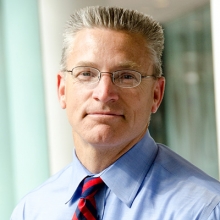
“There was basically no functioning government, Haugen recalls. “So much chaos is unleashed when there isn’t a civil authority exercising control. A lot of people tried to help, sending food and medicine and providing housing and education, but when it came to the problem of violence, very few people stepped up to that challenge.
Haugen established the International Justice Mission (IJM) in 1997 to address violence in developing countries. The organization has 17 field offices and works with local investigators to rescue victims of violence, support survivors, strengthen law enforcement, and bring violent criminals to justice. In his 2014 book, The Locust Effect: Why the End of Poverty Requires the End of Violence, Haugen argues that the progress made in the global fight against poverty means little when citizens’ basic safety is threatened.
At the 2016 Rotary International Convention in Korea, Haugen talked to Rotarians about one of the most harmful forms of what he calls the “everyday violence affecting the world’s poorest people – forced labor, or slavery. “Slavery is not a relic of history," he said, noting that an estimated 35 million enslaved people are hidden in plain sight, all over the world, generating $150 billion in profits for traffickers who seldom face prosecution. “It’s vaster and more brutal than ever. And it’s more stoppable than ever.
Haugen sat down with contributor Sallyann Price in Seoul to talk about the importance of addressing violence and safety in development work.
The Rotarian: How are poverty and violence related?
Haugen: When people think about the world’s poorest people, they don’t usually think about violence. They think of hunger, disease, and a lack of education and job opportunities. But just as important is daily vulnerability to violence, and not necessarily the violence that makes headlines: war, genocide, mass atrocities.
The form of violence that is far more destructive is what we call everyday violence – that’s sexual violence, police abuse, land theft, and forced labor. On a daily basis, these types of violence make it very difficult for the common poor person to improve his or her situation. You can give all kinds of goods and services to alleviate poverty, but if you’re not able to restrain the hands of the bullies that have the power to take it all away, you won’t see the kind of progress you want.
Abuse of power is a very simple human dynamic. It’s what a kid will understand in the schoolyard: There’s the kid who’s stronger and bigger than everybody else, and he’s abusing that power to take something from the victim, whether it’s lunch money or possessions or just their dignity. You see the same dynamic in the adult world; it just manifests itself in more adult, violent ways over time and on a bigger scale.
TR: Your address to the Rotary Convention focused specifically on the issue of slavery. Why this message for this audience?
Haugen: We are in a moment in history when forces are coming together to make it possible to end slavery in our lifetime. For the first time, enslavement is completely against the law everywhere. It’s an ancient evil that still exists, but it’s no longer the center of the global economy.
 Rotary has demonstrated a unique capacity to focus effort on a global problem that simply shouldn’t exist anymore. Look at the example of polio: We have a vaccine that works perfectly well and we agree that everyone should be safe from this disease, but there’s an access gap. Similarly, everyone should be safe from slavery, and no parent should have to worry about a child being enslaved. We know that a combination of effective law enforcement and excellent survivor support can measurably reduce slavery, and violence overall. Rotarians, in their work to end polio, have shown the kind of focus and determination we need to succeed in that struggle.
TR: How do you respond to scientist Steven Pinker? In his book The Better Angels of Our Nature, he argues that this is actually the least violent time in history.
Haugen: If you look at the broad scope of history, there is, on average, much less violence in our world today. That’s good news because it shows progress is possible. But think of the comparison with polio – fewer people are vulnerable to the disease, but does that mean we don’t finish the job? Like polio, the violence that remains in our world is more concentrated in the lives of the world’s poorest people.
Wealthier countries provide a measure of security and law enforcement on a public basis, but in the developing world, personal safety often means hiring private security. The world is now divided between those who can afford to pay for their own protection and the billions who are left in lawless chaos, experiencing extreme levels of violence.
TR: What role can more powerful members of society, like Rotarians, play in improving the situation?
Haugen: In much of the developing world, the public systems of justice are so broken that those with wealth and resources do not depend on them. Every culture debates the role of government and the range of services it should provide, but there should be no doubt that the most basic of those services is seeing to the security of its citizens. Those with the opportunity to lead must invest in public security so all citizens can enjoy that same safety.
It’s fascinating that the most common forms of violence in the developing world are almost always against the law already. The problem is not the absence of law, but the absence of law enforcement that protects everyone. That’s our focus at IJM.
TR: When did you first see this pattern?
Haugen: After I graduated from college, I lived in South Africa. The big issue at the time was the apartheid crisis. That’s where I started to see what it was like to live in a society of violent oppression and abuse. After law school, I went to work for the U.S. Department of Justice, where I worked specifically on the problem of police abuse in the United States. I started to see that no matter where you are in the world, no matter which country you’re in, people with power – whether political or police – tend to abuse it if they are not held accountable. I saw the particular problem of violence against the poor when I was sent to Rwanda in 1994 to direct the UN’s investigation into the genocide there. A lot of people tried to help, sending food and medicine and providing housing and education, but when it came to the problem of violence, very few people stepped up to that challenge. Slavery in this era strikes me as a similar issue: We are aware of it, we can stop it, and it is up to us to take that responsibility.
TR: How does IJM help a community plagued by violence?
Haugen: In many parts of the developing world, people have given up hope that law enforcement will ever protect the poor from violence. Our work demonstrates that it’s possible to change. The recovery of that hope is a game-changer.
We begin with what we call collaborative casework with the local authorities. We recruit a local team of lawyers, investigators, and social workers and start working on individual cases. As we try to bring the criminals to justice, we start to see the broken points in the criminal justice system.
When we begin working on a case, we pursue a baseline study to measure the prevalence of different types of violence and the performance of the police and the courts. Working from those two baselines, we can measure when the criminal justice system starts working better and violence decreases. Over hundreds of cases over many years, we’ve documented that it is possible to transform a broken law enforcement system into one that protects poor people effectively.
TR: How is that progress measured?
Haugen: One measure of success is the relative ease or difficulty of committing a particular crime. Cambodia is a great example. When we started working there 15 years ago, you could arrive in Phnom Penh and within an hour you could easily purchase a child for sex. That’s much harder to do now. Our project there focused on enhancing the criminal justice system’s capacity to send sex traffickers to jail, and we’ve seen hundreds of convictions since then. Our baseline study found that as many as 30 percent of commercial sex workers there were children. That figure is closer to 1 percent now. Also, because the Cambodian authorities are effectively enforcing the law, IJM is no longer needed. That’s our ultimate objective.
TR: How does IJM determine where to intervene?
HAUGEN: IJM uses a variety of criteria for assessing the location of a future project, including prevalence of crime and the political will of the government and local law enforcement to address crime. Because our model of justice system transformation centers on building capacity in the public justice systems of the countries and communities we’re working in, it is imperative that there be at least some desire to address the problem from within law enforcement.
TR: How can Rotary members help keep communities safe as they plan humanitarian aid projects in the developing world?
Haugen: Ask people what they need and connect with local groups addressing those needs. Since people are less likely to talk about violence, Rotary members should be very intentional about facilitating conversations to explore specific problems. Once you start the conversation and sharpen your focus on this issue, you start to see it over and over again.
Rotary is already raising the bar of excellence in terms of sustainability and accountability in its projects. But violence fights back in a way that is different from hunger or homelessness. If you take on violence, you may end up putting yourself on the line in some manner. The willingness to take on this challenge is a powerful message.
As a nurse, I found this article to be interesting on several public health topics: poverty, security, health and safety!
An excellent positive correlation between protecting public health and providing people with safety in the article "Justice for All", published in the February 2017, The Rotarian Magazine-
by By Sallyann Price for The Rotarian
Link to a human trafficking website with more data
In 1994 Rwanda was reeling from the genocide of as many as 1 million people over 100 days, the apex of decades of civil conflict in the East African nation.
Gary Haugen: The hidden reason for poverty the world needs to address now
Gary Haugen, then a young human rights attorney working for the U.S. Department of Justice, landed in Kigali to head a United Nations unit investigating the genocide and gathering evidence needed to prosecute the perpetrators for war crimes.
Haugen established the International Justice Mission (IJM) in 1997 to address violence in developing countries. The organization has 17 field offices and works with local investigators to rescue victims of violence, support survivors, strengthen law enforcement, and bring violent criminals to justice. In his 2014 book, The Locust Effect: Why the End of Poverty Requires the End of Violence, Haugen argues that the progress made in the global fight against poverty means little when citizens’ basic safety is threatened.
At the 2016 Rotary International Convention in Korea, Haugen talked to Rotarians about one of the most harmful forms of what he calls the “everyday violence affecting the world’s poorest people – forced labor, or slavery. “Slavery is not a relic of history," he said, noting that an estimated 35 million enslaved people are hidden in plain sight, all over the world, generating $150 billion in profits for traffickers who seldom face prosecution. “It’s vaster and more brutal than ever. And it’s more stoppable than ever.
Haugen sat down with contributor Sallyann Price in Seoul to talk about the importance of addressing violence and safety in development work.
The Rotarian: How are poverty and violence related?
Haugen: When people think about the world’s poorest people, they don’t usually think about violence. They think of hunger, disease, and a lack of education and job opportunities. But just as important is daily vulnerability to violence, and not necessarily the violence that makes headlines: war, genocide, mass atrocities.
The form of violence that is far more destructive is what we call everyday violence – that’s sexual violence, police abuse, land theft, and forced labor. On a daily basis, these types of violence make it very difficult for the common poor person to improve his or her situation. You can give all kinds of goods and services to alleviate poverty, but if you’re not able to restrain the hands of the bullies that have the power to take it all away, you won’t see the kind of progress you want.
Abuse of power is a very simple human dynamic. It’s what a kid will understand in the schoolyard: There’s the kid who’s stronger and bigger than everybody else, and he’s abusing that power to take something from the victim, whether it’s lunch money or possessions or just their dignity. You see the same dynamic in the adult world; it just manifests itself in more adult, violent ways over time and on a bigger scale.
TR: Your address to the Rotary Convention focused specifically on the issue of slavery. Why this message for this audience?
Haugen: We are in a moment in history when forces are coming together to make it possible to end slavery in our lifetime. For the first time, enslavement is completely against the law everywhere. It’s an ancient evil that still exists, but it’s no longer the center of the global economy.
TR: How do you respond to scientist Steven Pinker? In his book The Better Angels of Our Nature, he argues that this is actually the least violent time in history.
Haugen: If you look at the broad scope of history, there is, on average, much less violence in our world today. That’s good news because it shows progress is possible. But think of the comparison with polio – fewer people are vulnerable to the disease, but does that mean we don’t finish the job? Like polio, the violence that remains in our world is more concentrated in the lives of the world’s poorest people.
Wealthier countries provide a measure of security and law enforcement on a public basis, but in the developing world, personal safety often means hiring private security. The world is now divided between those who can afford to pay for their own protection and the billions who are left in lawless chaos, experiencing extreme levels of violence.
TR: What role can more powerful members of society, like Rotarians, play in improving the situation?
Haugen: In much of the developing world, the public systems of justice are so broken that those with wealth and resources do not depend on them. Every culture debates the role of government and the range of services it should provide, but there should be no doubt that the most basic of those services is seeing to the security of its citizens. Those with the opportunity to lead must invest in public security so all citizens can enjoy that same safety.
It’s fascinating that the most common forms of violence in the developing world are almost always against the law already. The problem is not the absence of law, but the absence of law enforcement that protects everyone. That’s our focus at IJM.
TR: When did you first see this pattern?
Haugen: After I graduated from college, I lived in South Africa. The big issue at the time was the apartheid crisis. That’s where I started to see what it was like to live in a society of violent oppression and abuse. After law school, I went to work for the U.S. Department of Justice, where I worked specifically on the problem of police abuse in the United States. I started to see that no matter where you are in the world, no matter which country you’re in, people with power – whether political or police – tend to abuse it if they are not held accountable. I saw the particular problem of violence against the poor when I was sent to Rwanda in 1994 to direct the UN’s investigation into the genocide there. A lot of people tried to help, sending food and medicine and providing housing and education, but when it came to the problem of violence, very few people stepped up to that challenge. Slavery in this era strikes me as a similar issue: We are aware of it, we can stop it, and it is up to us to take that responsibility.
TR: How does IJM help a community plagued by violence?
Haugen: In many parts of the developing world, people have given up hope that law enforcement will ever protect the poor from violence. Our work demonstrates that it’s possible to change. The recovery of that hope is a game-changer.
We begin with what we call collaborative casework with the local authorities. We recruit a local team of lawyers, investigators, and social workers and start working on individual cases. As we try to bring the criminals to justice, we start to see the broken points in the criminal justice system.
When we begin working on a case, we pursue a baseline study to measure the prevalence of different types of violence and the performance of the police and the courts. Working from those two baselines, we can measure when the criminal justice system starts working better and violence decreases. Over hundreds of cases over many years, we’ve documented that it is possible to transform a broken law enforcement system into one that protects poor people effectively.
TR: How is that progress measured?
Haugen: One measure of success is the relative ease or difficulty of committing a particular crime. Cambodia is a great example. When we started working there 15 years ago, you could arrive in Phnom Penh and within an hour you could easily purchase a child for sex. That’s much harder to do now. Our project there focused on enhancing the criminal justice system’s capacity to send sex traffickers to jail, and we’ve seen hundreds of convictions since then. Our baseline study found that as many as 30 percent of commercial sex workers there were children. That figure is closer to 1 percent now. Also, because the Cambodian authorities are effectively enforcing the law, IJM is no longer needed. That’s our ultimate objective.
TR: How does IJM determine where to intervene?
HAUGEN: IJM uses a variety of criteria for assessing the location of a future project, including prevalence of crime and the political will of the government and local law enforcement to address crime. Because our model of justice system transformation centers on building capacity in the public justice systems of the countries and communities we’re working in, it is imperative that there be at least some desire to address the problem from within law enforcement.
TR: How can Rotary members help keep communities safe as they plan humanitarian aid projects in the developing world?
Haugen: Ask people what they need and connect with local groups addressing those needs. Since people are less likely to talk about violence, Rotary members should be very intentional about facilitating conversations to explore specific problems. Once you start the conversation and sharpen your focus on this issue, you start to see it over and over again.
Rotary is already raising the bar of excellence in terms of sustainability and accountability in its projects. But violence fights back in a way that is different from hunger or homelessness. If you take on violence, you may end up putting yourself on the line in some manner. The willingness to take on this challenge is a powerful message.
Check the website: Polaris- freedom happens now
Labels: Cambodia, human trafficking, Rwanda, Sallyann Price, The Rotarian
posted by Juliana L'Heureux | 1:20 PM
|
0 comments


