



Insulin should be free!
"In January 1922, Leonard Thompson, a 14-year-old boy dying from diabetes in a Toronto hospital, became the first person to receive an injection of insulin. Within 24 hours, Leonard’s dangerously high blood glucose levels dropped to near-normal levels."
Politics of insulin reveals the sickness of the United States health system. An echo essay published in the New Statesman, the United Kingdom edition (UK).

Recognizing that some people could fall through the cracks, Obamacare provided states with free money to expand their Medicaid programs. Unfortunately for the hypothetical smoking diabetic, Texas is one of many Republican-controlled states that refused to accept the money on ideological grounds.
#GOP Senator Susan Collins and Senator Joe Manchin alert!
Build Back Better, Joe
"Joe Biden’s Build Back Better Act is the latest attempt to bring drug prices under control. It would cap prices for insulin and give the government more powers to negotiate with pharma companies."
Diabetics need insulin to stay alive but drug makers and Republican politicians ensure the price remains high.
By Charlotte Kilpatrick- A Franco-American journalist living in London. She writes about health and politics.
Until January 1922 diabetes was a death sentence. A hundred years ago, on 11 January 1922, a 14-year-old Canadian boy became the first diabetic to escape that fate by receiving an injection of insulin. Before that, those with Type 1 diabetes usually lived no more than two years after diagnosis. In 1923 the team of researchers who discovered insulin sold the patent to the University of Toronto for $1 because they wanted to keep the medicine affordable for everyone.
Flash forward 100 years and the price of insulin is anything but. Prices have soared: some formulations cost 1,000% more than they did at the turn of the 21st century. The price of one vial of Humalog insulin stood at $21 in 1999; it cost $332 in 2019, and many diabetics require more than one vial a month.
The reasons for the price rises are complex but can be whittled down to a simple fact: without insulin, diabetics die. Pharmaceutical companies that manufacture insulin have enormous leverage to charge whatever they want. In most developed countries diabetics don’t pay hundreds and sometimes thousands of dollars a month for insulin because governments regulate the price. The US, of course, is the exception. But with 10.5% of the US population diagnosed with diabetes — a percentage which is sure to grow — the rising cost of insulin has become a political punching bag.
It seems strange that a medicine invented 100 years ago has ballooned in price to the point that one in four diabetics reports rationing insulin because of cost. Yet despite its age, insulin remains relatively difficult to make. Unlike drugs such as paracetamol that are chemically derived, insulin is a biologic drug extracted from living organisms. Only three pharmaceutical companies — Eli Lilly, Sanofi and Novo Nordisk — produce insulin and control 90 per cent of the market.
This control makes it difficult for a generic drug maker to come up with its own version. By the time it could bring a generic to market, the big three insulin makers would have developed a newer version incrementally better than the older one. Because doctors naturally want to prescribe the best medicine for their patients, a company making a generic equivalent would find itself squeezed out of the market.
“Honestly, we sometimes call the big three insulin makers a cartel,” says Elizabeth Pfiester, founder and executive director of diabetes advocacy group T1 International. “They have demonstrated behaviour where they raise insulin prices in lockstep, and they have a near-complete dominance in the market. They also put large amounts of money into sponsorships and patient advocacy groups, so their influence is huge.”
Faced with growing pressure to lower prices, the pharmaceutical companies have started releasing cheaper formulations. Eli Lilly announced that it will make a so-called generic version of its Humalog insulin and sell it for 70% less, at $82.42 for an individual vial. Meanwhile, it charges Germans an even lower price of $55 for the exact same insulin.
Melinda St Louis, director of the Medicare for All campaign at Public Citizen in Washington, DC, says that giving the drug companies the power to decide insulin prices leaves diabetics at their mercy. “The reality is that a lot of people fall through the cracks. What we need to do to make insulin accessible for everyone is lower prices across the board,” she says.
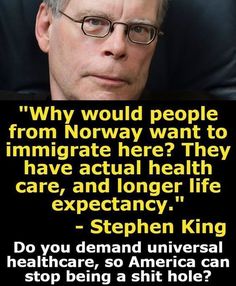
Systemic illness
According to a 2021 report by the RAND Corporation, a think tank, sick Americans pay on average 256% more for medicine than people in 32 other countries. The price discrepancy is in part the result of the piecemeal nature of the US health insurance system, which favors large employers. Companies are only required to offer insurance to full-time employees: a waitress working 29 hours a week on her feet is not entitled to coverage.
Things could always be worse. A smoking diabetic who earns just enough in Dallas, Texas, to be above the poverty line to qualify for Medicaid (the government plan for the extremely poor) would be priced out of any of the plans offered under the Affordable Care Act, known as Obamacare.
Diabetics need insulin to stay alive but drug makers and Republican politicians ensure the price remains high.
By Charlotte Kilpatrick- A Franco-American journalist living in London. She writes about health and politics.
Until January 1922 diabetes was a death sentence. A hundred years ago, on 11 January 1922, a 14-year-old Canadian boy became the first diabetic to escape that fate by receiving an injection of insulin. Before that, those with Type 1 diabetes usually lived no more than two years after diagnosis. In 1923 the team of researchers who discovered insulin sold the patent to the University of Toronto for $1 because they wanted to keep the medicine affordable for everyone.
Flash forward 100 years and the price of insulin is anything but. Prices have soared: some formulations cost 1,000% more than they did at the turn of the 21st century. The price of one vial of Humalog insulin stood at $21 in 1999; it cost $332 in 2019, and many diabetics require more than one vial a month.
The reasons for the price rises are complex but can be whittled down to a simple fact: without insulin, diabetics die. Pharmaceutical companies that manufacture insulin have enormous leverage to charge whatever they want. In most developed countries diabetics don’t pay hundreds and sometimes thousands of dollars a month for insulin because governments regulate the price. The US, of course, is the exception. But with 10.5% of the US population diagnosed with diabetes — a percentage which is sure to grow — the rising cost of insulin has become a political punching bag.
It seems strange that a medicine invented 100 years ago has ballooned in price to the point that one in four diabetics reports rationing insulin because of cost. Yet despite its age, insulin remains relatively difficult to make. Unlike drugs such as paracetamol that are chemically derived, insulin is a biologic drug extracted from living organisms. Only three pharmaceutical companies — Eli Lilly, Sanofi and Novo Nordisk — produce insulin and control 90 per cent of the market.
This control makes it difficult for a generic drug maker to come up with its own version. By the time it could bring a generic to market, the big three insulin makers would have developed a newer version incrementally better than the older one. Because doctors naturally want to prescribe the best medicine for their patients, a company making a generic equivalent would find itself squeezed out of the market.
“Honestly, we sometimes call the big three insulin makers a cartel,” says Elizabeth Pfiester, founder and executive director of diabetes advocacy group T1 International. “They have demonstrated behaviour where they raise insulin prices in lockstep, and they have a near-complete dominance in the market. They also put large amounts of money into sponsorships and patient advocacy groups, so their influence is huge.”
Faced with growing pressure to lower prices, the pharmaceutical companies have started releasing cheaper formulations. Eli Lilly announced that it will make a so-called generic version of its Humalog insulin and sell it for 70% less, at $82.42 for an individual vial. Meanwhile, it charges Germans an even lower price of $55 for the exact same insulin.
Melinda St Louis, director of the Medicare for All campaign at Public Citizen in Washington, DC, says that giving the drug companies the power to decide insulin prices leaves diabetics at their mercy. “The reality is that a lot of people fall through the cracks. What we need to do to make insulin accessible for everyone is lower prices across the board,” she says.
Systemic illness
According to a 2021 report by the RAND Corporation, a think tank, sick Americans pay on average 256% more for medicine than people in 32 other countries. The price discrepancy is in part the result of the piecemeal nature of the US health insurance system, which favors large employers. Companies are only required to offer insurance to full-time employees: a waitress working 29 hours a week on her feet is not entitled to coverage.
Things could always be worse. A smoking diabetic who earns just enough in Dallas, Texas, to be above the poverty line to qualify for Medicaid (the government plan for the extremely poor) would be priced out of any of the plans offered under the Affordable Care Act, known as Obamacare.
Recognizing that some people could fall through the cracks, Obamacare provided states with free money to expand their Medicaid programs. Unfortunately for the hypothetical smoking diabetic, Texas is one of many Republican-controlled states that refused to accept the money on ideological grounds.
Diabetics in other red states share the same grim luck. Six out of ten of the US states with the highest rates of diabetes have refused the Medicaid expansion to provide health insurance for poor people.
Build Back Better, Joe
Joe Biden’s Build Back Better Act is the latest attempt to bring drug prices under control. It would cap prices for insulin and give the government more powers to negotiate with pharma companies.
The sailing has been anything but smooth for Build Back Better. It barely passed the House of Representatives and is being held hostage in the Senate, where it needs every Democratic vote to pass. One Democratic senator who has voiced concerns is Kyrsten Sinema from Arizona, who says that negotiating drug prices with pharma companies would mean less money for research and development, and therefore fewer innovative drugs.
However, a 2017 study revealed that the premium Americans paid for the 20 best-selling drugs was $40 billion higher than the amount the drug companies spent on R&D. A Congressional Budget Office paper released in August reported that allowing negotiations could save the government 15-25% on drug costs.
In many cases Americans end up paying for the same medical research twice. The biggest public funder of drug research is the US taxpayer, through the National Institutes of Health, which contributes almost $52 billion to research. The results are then sold to pharma companies, which sell the drugs to Americans at jacked-up prices.
According to St Louis a cap on insulin prices is a step in the right direction, but it’s not enough. “The hold-out that we are seeing from some Democratic senators is an example of the outside influence of the pharma industry on our democratic process,” she says. “Sinema has received enormous amounts of campaign contributions from the drug companies that have all opposed [Build Back Better].”
Sinema, who raked in $1.1 million in campaign donations from pharmaceutical companies in three months, is far from the only recipient of Big Pharma money. The industry is the biggest spending lobbying group in the US, dishing out $352.8 million last year. That’s not the only way Big Pharma buys influence. It spent $6.65 billion in 2020 on advertising to convince patients to buy their medicines. That’s enough to bring five new drugs to market in a year.
For the moment negotiations on Build Back Better continue. Joe Manchin, Democratic senator for West Virginia, a state where 16% of the population has diabetes, is holding out on the legislation because he claims it will add to the deficit, and that poor families will spend the extra money from tax credits on illegal drugs.
Perhaps it hasn’t occurred to him and the 50 Republican senators who oppose the bill that poor families can’t afford to wait for lower prescription drug prices.
Build Back Better, Joe
Joe Biden’s Build Back Better Act is the latest attempt to bring drug prices under control. It would cap prices for insulin and give the government more powers to negotiate with pharma companies.
The sailing has been anything but smooth for Build Back Better. It barely passed the House of Representatives and is being held hostage in the Senate, where it needs every Democratic vote to pass. One Democratic senator who has voiced concerns is Kyrsten Sinema from Arizona, who says that negotiating drug prices with pharma companies would mean less money for research and development, and therefore fewer innovative drugs.
However, a 2017 study revealed that the premium Americans paid for the 20 best-selling drugs was $40 billion higher than the amount the drug companies spent on R&D. A Congressional Budget Office paper released in August reported that allowing negotiations could save the government 15-25% on drug costs.
In many cases Americans end up paying for the same medical research twice. The biggest public funder of drug research is the US taxpayer, through the National Institutes of Health, which contributes almost $52 billion to research. The results are then sold to pharma companies, which sell the drugs to Americans at jacked-up prices.
According to St Louis a cap on insulin prices is a step in the right direction, but it’s not enough. “The hold-out that we are seeing from some Democratic senators is an example of the outside influence of the pharma industry on our democratic process,” she says. “Sinema has received enormous amounts of campaign contributions from the drug companies that have all opposed [Build Back Better].”
Sinema, who raked in $1.1 million in campaign donations from pharmaceutical companies in three months, is far from the only recipient of Big Pharma money. The industry is the biggest spending lobbying group in the US, dishing out $352.8 million last year. That’s not the only way Big Pharma buys influence. It spent $6.65 billion in 2020 on advertising to convince patients to buy their medicines. That’s enough to bring five new drugs to market in a year.
For the moment negotiations on Build Back Better continue. Joe Manchin, Democratic senator for West Virginia, a state where 16% of the population has diabetes, is holding out on the legislation because he claims it will add to the deficit, and that poor families will spend the extra money from tax credits on illegal drugs.
Perhaps it hasn’t occurred to him and the 50 Republican senators who oppose the bill that poor families can’t afford to wait for lower prescription drug prices.
Labels: Build Back Better, Charlotte Kilpatrick. GOP, Diabetics, Medicare for all, New Statesman, Obamacare
posted by Juliana L'Heureux | 5:10 AM
|
0 comments


