Maine Writer

Its about people and issues I care about.

My Photo
Name:
Location: Topsham, MAINE, United States

My blogs are dedicated to the issues I care about. Thank you to all who take the time to read something I've written.

Thursday, December 20, 2018

Trump failed coal- opinion from Pikeville Kentucky published in Cambridge MA

This meaningful opinion about coal was published in Pikeville Kentucky and was echoed in the Massachusetts newspaper the Cambridge Chronicle, written by Rick Holmes.


PIKEVILLE, Ky. – They call this “the city that moves mountains.” Pikeville cut through Peach Orchard Mountain to relieve flooding and create more level land downtown. States have made steep cuts across mountainsides all over Appalachia to build new four-lane highways. Other mountains have been moved to get at the coal underneath them.

For 100 years, the hardy miners of Appalachia dug tunnels under the mountains, breaking off chunks of coal with nine-pound hammers. Then the coal companies learned they could get at those coal seams more quickly with dynamite, giant earth-moving equipment – and fewer miners.

Coal people call it surface mining; critics call it strip mining or, worse, mountaintop removal. Early on, there were horror stories about families that had sold their mineral rights generations before, when mining happened underground, only to find coal companies removing the whole farm to get at what’s beneath. Creeks have been buried under tons of dirt pushed off mountaintops, industrial chemicals used in mining have poisoned wells and made people sick.

A murdered mountain is a depressing sight, even for those who live off coal. Nobody loves the mountains more than those who’ve always lived here. Surface mining sites are supposed to be reclaimed when all the coal’s gone, with steep walls knocked down and topsoil put back in place. But coal companies don’t always follow through.

Bent Mountain, north of Pikeville, is an example. It has been decapitated, leaving a 1,000-acre scar. Kentucky regulators sued to get the owners of the Bent Mountain mine to keep their reclamation promises, but the company is still dragging its feet.

In Central Appalachia, coal has been a blessing and a curse. People raised here care about family and heritage, and coal is wrapped up with both. Daddy worked in the mines, just like his daddy and his daddy before that. Coal supported their families for generations. They don’t have much patience with outsiders who badmouth coal or politicians who want to regulate it to death.

“God put that coal under those mountains for us to use,” says Roger Ford, whose family roots in Pike County go back centuries. “We use the same techniques to cut roads as to dig coal, but you never see an environmental group protesting a four-lane highway.”

Press mountain folks a little harder though, and they may admit that granddaddy died of black lung, great-granddaddy was killed in a mine explosion, and daddy hasn’t had steady work in 10 years. And most will concede they’d rather not see their children stuck in those dirty, dangerous jobs.

The number of jobs in coal has been steadily shrinking for 30 years, as machines took over the work of miners. Production rose even as employment fell, until 10 years ago. Then natural gas became competitive, renewables began taking a larger share of the energy market and coal jobs plummeted. There were 13,600 coal jobs in eastern Kentucky in 2011; this year it fell to 3,835.

With the coal jobs disappearing, young people are leaving the mountains, Kim McCoy says, especially the brightest and best educated ones. Left behind are those too old to leave, or too invested in their homes and equipment. The young ones who stay get bored and end up addicted to opioids, said McCoy, a historian and civic leader in Matewan, West Virginia. Some of the older ones, too.

“We’ve watched a shadow fall over our area,” she told me.

A sponsor’s sign at Pikeville’s soccer field declares “Coal: Our Children’s Future!” But neither Ford nor McCoy believe it. They are looking for other options. McCoy hopes a proposed new four-lane highway will bring manufacturing to her small town. Ford had hoped to build greenhouses on a former strip mine, and sees a lot of potential on those sites. He’s now working in alternate energy: biofuels, wind and solar. They are hopeful, and committed.

Those seeds of hope may yet sprout on Bent Mountain. There’s a plan to build a $150 million solar farm on the site, if the coal company would just finish its reclamation work. There are jobs in solar, more than twice as many nationwide as there are in coal.

There’s a larger point, one that a lot of people in Coal Country – not to mention the White House – have a hard time accepting: Coal is the dirtiest form of energy. It poisons the air and is wrecking the earth’s climate.

Maybe God put the coal there to hold up the mountain, not to burn in a power plant and pollute the planet. Maybe the best plan is to leave it there and find other ways for the people of the mountains to make a living. Developing solar energy on the abandoned surface mines would be a fine place to start.

Rick Holmes can be reached at rick@rickholmes.net. 

Labels: , , , ,

Tuesday, May 08, 2018

When presidential leadership cared - President Johnson: A Rick Holmes essay

Thank God (and I mean that prayerfully, in thanks!) there are essayists like Rick Holmes, an opinion columnist published in the Arkansas Time Record newspaper! "On the Road", reminding readers about the humanitarian legacy of presidential leadership, in this opinion column:  

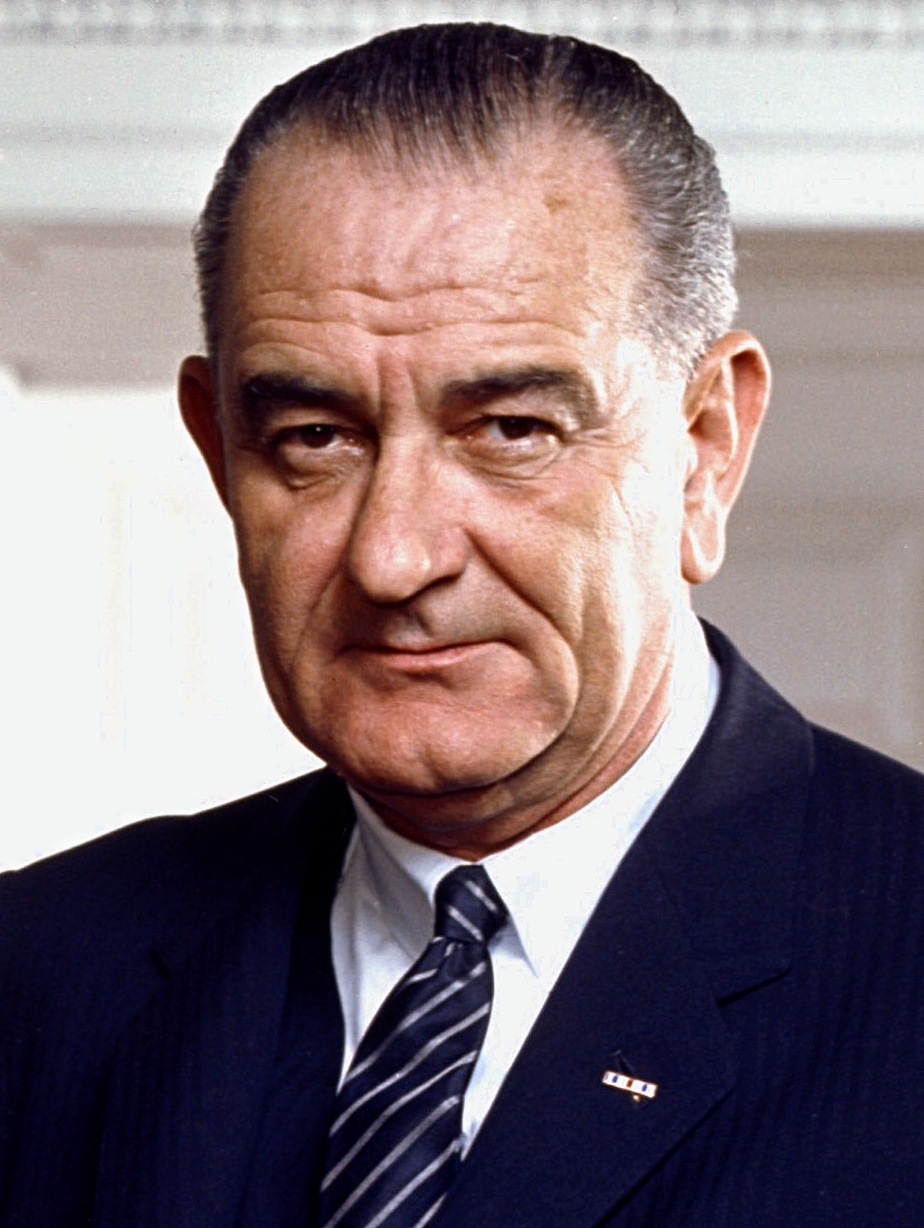
President Lyndon Johnson (1908-1973) was determined to make a difference.

President Lyndon Johnson 
"When it comes to rural poverty, neither party has a plan', Rick Holmes in the Arkansas Times Record.

Johnson City, Texas – It’s no coincidence that the offices of the Pedernales Electric Cooperative sit just across the street from Lyndon Johnson’s boyhood home.

In the 1930s, the Texas Hill Country was like most of rural America: Isolated, dusty and poor, with few jobs and limited prospects, losing its brightest young people to the growing cities. Those left behind still lived pretty much like they had in the 19th century. They didn’t even have electricity, because it cost too much to string wires to houses spread so far apart.

Young Lyndon Johnson ran for Congress in 1937 on a promise to bring power to the Hill Country. He had an ally in President Franklin D. Roosevelt, whose Rural Electrification Administration – one of dozens of New Deal agencies trying to improve the lives of struggling families – provided start-up loans to customer-owned electric cooperatives. Once elected, Johnson got the federal loan and went farm-to-farm talking people into joining the cooperative. Soon enough, folks in the Hill Country had refrigerators, radios and the opportunities that come with being part of the wired world.

Johnson knew the lives of the rural poor. He taught school in Cotulla, Texas, where his students, nearly all Mexican-Americans, were trapped by poverty and discrimination. He saw the toll taken by underfunded schools and unavailable health care.

A passionate New Dealer, Johnson believed the government could make life better for people his father had described as “caught in the tentacles of circumstance.” In Congress, and especially after he became president on the assassination of John F. Kennedy, Johnson delivered. The domestic agenda enacted under LBJ stands second only to FDR’s in shaping modern America: Medicare and Medicaid to help the sick; food stamps to feed the hungry; Head Start, federal education aid and Work Study to help close the education gap. 


No president since has come close to President Johnson's domestic legacy.

President Johnson called it the War on Poverty, a term conservative critics ridiculed after he left office, declaring it was a war poverty had won. It was a bad metaphor – war metaphors usually are – because it takes constant effort to minimize poverty, and there’s no final victory. But while he was in office, the percentage of Americans living below the poverty line fell from 23 percent to 12 percent, no mean accomplishment. Johnson cut poverty in half, and if Vietnam had not derailed his presidency, he likely would have cut it more.

“I hope it may be said, a hundred years from now, that by working together we helped make our country more just, more just for all its people, as well as insure and guarantee the blessings of liberty for all of our posterity,” Johnson said as his presidency drew to a close. “That is what I hope.

“But I believe that at least it will be said that we tried.”


In my travels across America over the past year, I’ve seen a lot of places where the main commerce seems to be dollar stores, pawn shops, payday lenders and disability claims. Further from the interstates there are no signs of economic life at all.

Rural America is hurting today, at least as much as back in the 1930s. Jobs have been lost to trade and mechanization. Family farms have been lost to corporatization. Rural America is steadily losing population, as bright and ambitious young people flee to cities and suburbs. Those left behind are isolated from the global economy, dependent on government benefit programs and increasingly addicted to opioids.

Persistent poverty, passed down from generation to generation, comes in all colors: white in the hollers of Appalachia, black in the Mississippi Delta, brown in the Rio Grande Valley, red on the Indian reservations of the west. As in the ’30s, discrimination strengthens poverty’s grip.

The difference is that today, nobody in Washington is fighting to get high-speed Internet into rural towns like LBJ fought to bring electricity to the Hill Country. There’s no national plan to break the opioid epidemic or revive communities on the brink of becoming ghost towns. Rural voters are fed culture wars rhetoric by Republicans and mostly ignored by Democrats. 

When it comes to rural poverty, neither party has a plan.

There are no easy answers. Some of President Johnson's War on Poverty programs came up empty. But, at least he and Congress made the effort. What deepens the desperation of the nation’s rural poor today is that Washington doesn’t even seem to be trying.

Labels: , , , , ,

Monday, February 05, 2018

Black History is parallel to American history

Reported in the Illinois newspaper:  Star Courier ~ Rick Holmes


February 2018 ~ Black History Month 
When it was first proclaimed in 1976, Black History Month made sense. The stories of the struggles and achievements of African-Americans had gone untold, for too long a time.
Atlanta Georgia - The tomb holding Martin Luther King Jr. is covered in plastic while workers spruce up the reflecting pool that surrounds it. Written in the tiles is King’s promise that he will never be satisfied “until justice rolls down like water and righteousness like a mighty stream."

King rests in the King Center, less than a block from the house where he was born, and just steps from the Ebenezer Baptist Church, where he - along with his father and his grandfather before him - preached. All are part of the Martin Luther King Historic District, which will be ready for the spotlight by April 4, the 50th anniversary of King’s assassination.

This will be a year of grim 50th anniversaries, because 1968 was an especially dark year. It was a year marked by war, riots and assassinations, by deep divisions and the death of dreams. No event shook the nation like King’s death in Memphis, a city that is also preparing commemorative events. 

King had come to Memphis in the spring of 1968 to march in support of sanitation workers. The nearly all-black workforce had gone on strike after two workers were killed by a trash compacting machine. They did dangerous work for pitifully low pay. The placards they carried demanded not just pay, but dignity. “I AM A MAN,” they declared.

King was standing on the balcony outside his room at the Lorraine Motel, talking with friends in the parking lot below, when the shots rang out. The motel is now part of the National Civil Rights Museum. Visitors can look through a window into the room where King stayed, unchanged since his death, and look out past the balcony to the rear window of a rooming house where James Earl Ray stood when he fired the shots that killed the conscience of a nation.

When it was first proclaimed in 1976, Black History Month made sense. The stories of the struggles and achievements of African-Americans had gone untold for so long, why not encourage people, especially students, to learn about Harriet Tubman, Booker T. Washington, Frederick Douglass and, of course, Martin Luther King?

But segregating African-American history from American history - giving them the shortest month on the calendar, at that - has always felt not quite right. Those stories aren’t black history; they are American history, part of a huge canvass of aspirations, conflict and connections. Their stories need to be included in our story, not stored on a separate-but-equal shelf.

That context is being provided where people meet history face-to-face. There’s the small stone stump on a corner in Fredericksburg, Virginia., that a plaque identifies as the main auction block for slave sales, or the sign in New Orleans marking the location of the notorious slave pen featured in “Twelve Years a Slave.

“You can’t miss Charleston’s Old Slave Mart, now a museum operated by the city. And if you’re driving down Rte. 80 in Alabama, you’re reminded every few miles of the march King led from Selma to Montgomery that inspired passage of the 1965 Voting Rights Act."

Some of the changes are subtle. At Thomas Jefferson’s Monticello, curators avoid the term “slaves,” preferring the terms “enslaved men and women,” or “enslaved families.” 

It makes them more human by describing slavery as their condition, not their identity.

One of the ways Memphis is preparing to honor Dr. King is by removing the statues of two Confederate leaders. City leaders did it quickly over the December holidays, taking advantage of a loophole in a state law enacted to prevent such assaults on Confederate memorials. 

Some conservatives believe in local decision-making right up to the point local people make a decision they disapprove of.
I’m fine with Memphis’ decision. The statue of Confederate President Jefferson Davis, erected in 1964, was more a rejection of the Civil Rights Act than a tribute to the Civil War. 

But the National Civil Rights Museum teaches a lot more history to a lot more people than the relocation of a dated and offensive statue.

The granddaddy of Confederate monuments sits outside Atlanta, where Robert E. Lee, Stonewall Jackson and Jefferson Davis are carved into Stone Mountain, the site where the second iteration of the Ku Klux Klan was founded. A Democrat running for governor has called for the figures to be sandblasted off the face of the mountain, which seems unwise as well as unlikely.

In his famous speech on the steps of the Lincoln Memorial, King said he dreamed of a time when America would,“Let freedom ring from Stone Mountain of Georgia.” 

On the anniversary of King’s death, one Georgia legislator hopes to see thousands of people on top of Stone Mountain. Another is calling for a “freedom bell” to be built atop Stone Mountain in honor of Dr. King.

Sounds good to me. Doing history right is a matter of addition, not subtraction.
-- Rick Holmes

Labels: , , , , ,